Brochan Lom: food for the feet

Brochan Lom is a Gaelic song or port a beul (“mouth music”) that is well-known in Scottish music circles. Perhaps almost too well-known because many people have grown up with it, meaning it tends to get overlooked by many musicians. The title translates as Thin Porridge and it is often taught in Scottish schools, including those where Gaelic is not otherwise spoken.

Some background and lyrics can be found on Wikipedia. The ever-helpful Tobar an Dualchais/ Kist o’ Riches web site has many recordings, both vocal and instrumental, including one by Kate Buchanan and Nan Bryan (Mary Anne) Buchanan, collected in 1965 by Thorkild Knudsen.

It is undoubtedly a tune that swings along nicely and has much rhythmic emphasis. In G, it suits the flute and whistle very nicely and allows the D and G notes to punch through, providing lift for dancers. When I play this in celidhs, it’s great for setting up a good rhythm and giving the dancers a boost as they latch onto it.

Resources for the tune are now up, as are those for Katie Bairdie, another school favourite that we will be learning next.

Photo: Record-breaking porridge by chatirygirl, some rights reserved.


A tricky jig: Tom Billy’s No.2

To follow on from the first jig of the term, we learned Tom Billy’s No.2, a three part tune associated with the playing of Julia Clifford, who recorded it with Tom Billy’s No.1, our previous tune.

This tune shifts key through the parts and is awkward on the flute and whistle at first as the notes don’t seem to fall where the fingers would expect them and want to go. As such it is very distinctive, but can make for hard work. Listening to a recording of it certainly helps as it becomes easier with familiarity.

There are opportunities for rolls and variations in this tune and fiddles are likely to have a different approach to this from flutes and whistles. The recordings in the resources show some of the ways I approach the tune.

Here’s a video of Julia Clifford playing an air and a slide (12/8 type of jig):

You can find out more about Julia Clifford at the Rambling House web site and this interview with her on the Journal of Sliab Luachra web site. There’s a nice little appreciation of her recording with Denis Murphy on the IvyLeaf web site.

Photo of Julia Clifford (right) pictured with her sister Bridgie Kelleher (c) Journal of Sliabh Luachra no.4

Another Irish slide: Is it the Priest You Want?

The second of two 12/8 slides the Slow and Steady group are learning, The Priest is in G and sits nicely on flutes and whistles allowing some distinctive punchy phrases to pop through.
For further information on slides, check out the links on The Road to Lisdoonvarna, the slide in E minor that precedes this tune in the set. The tune is primarily constructed around a broken chord of G major and allows a strong rhythm to be developed through the simple repetition of a handful of notes.

Slides can be played quite fast so that the rhythm can be brought out and emphasised, but try playing it as a waltz while learning it in order to get inside it more. This maintains the relationship between the notes, but gives you more time to remember the tune. Decoration tends to be quite simple, just single cuts and strikes, particularly in the first part. The second part can take short rolls that help accent the rhythm, but only attempt these once you have the tune firmly established.

Resources for this tune are on the Resources page for this year.

A search around reveals that this may also be known as Is it the Priest You Want?, (Ne An T-Sagart Ta Uait?) which suggests that there may have been words to go with it at some point. The Fiddler’s Companion gives a version of it and identifies it as having first been published by Edward Bunting in 1796 and suggests it was more recently popularised by Johnny O’Leary, who learned it from Din Tarrant, both from Kerry. You can download a facsimile of Bunting’s The Ancient Music of Ireland from the Petrucci Library.

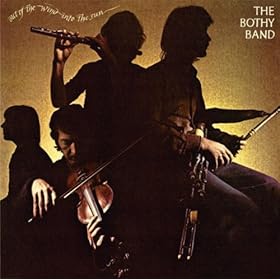
Like many, I originally learned this from a recording by The Bothy Band, who play this at the start of a set on Out of the Wind, Into the Sun, their third and final studio album. The Bothy Band, along with Planxty, were highly influential in raising the standards of Irish music recordings and arrangements in the 1970s. They influenced Scottish groups like Ossian (dubbed “The Scottish Planxty” maybe in more recent times) and Lúnasa, who have been compared with them for their musicianship and approach.

Photos: (top) The Bothy Band (c) unknown ( from Kölncampus website); below, album cover from Amazon.

Fragments of folk music: composing new from old

In the previous class we discussed the idea of composing some music based on The Hawick Missal, an important fragment of medieval manuscript containing music associated with Easter at Melrose Abbey in the Scottish Borders.

It is thought that this music would only have been sung by the monastic community in the lead up to Easter and that members of the public in attendance would hear it, but not see what was happening.

Imagining a situation in which somebody heard the music and carried it in their heads after the event, I wondered what would happen if we took our own fragments of this music and expose it to the folk process. Could some of that music end up as a waltz, a jig, a reel or an air? A new tune inspired by the Scottish Borders?

The opening of the manuscript begins with the notes: A, F, G, E, F, E, D. The only indication of duration is the syllables of the Latin. I encourage everyone to play with the notes and the scale, transpose them, sharpen or flatten them, stretch and compress them as you like. It could be these particular opening notes or from elsewhere in the manuscript, it’s up to you.

The PDF of a modern transcription of the manuscript can be found here on the Fragments project website (PDF link). There is an ongoing wider project associated with this and details of it can be found elsewhere on the Fragments website.

Once you find a phrase you like, bring it to the next class and we’ll look at ways to build it up into a new piece. No need to write it down, just a way of remembering it. There may also be an opportunity for us to visit nearby Dryburgh Abbey to play our music in the Chapter House, which has fantastic acoustics, as part of our next group excursion. More on Dryburgh on Wikipedia.

Photo of Dryburgh Abbey (c) Gordon Turnbull; photo of the Hawick Missal from the Fragments Project web site (c) The Red Field

A jig from County Kerry: Tom Billy’s

We began the term with the first of a pair of jigs that are associated with Irish fiddler Tom Billy Murphy. Tom Billy (1879-1944) was from the Sliabh Luachra (“Rushy Mountain”) are on the Cork and Kerry border and is particularly known for its polkas and slides.

The number of noted fiddlers from the area include Julia Clifford, Denis Murphy and Padraig O’Keeffe. Tom Billy never recorded, but he was an influential teacher and many tunes are associated with him or bear his name.

There is some introductory background information on Tom Billy on the Fiddle List archives and in this extract from The Cork Examiner. This excellent RTE radio documentary goes into more detail:

This PDF by Brendan Taafe talks a bit about the music and background of Sliabh Luachra, while this interview with fiddle teacher Matt Crannitch discusses the musical importance of the area.

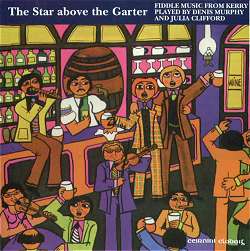
I think that I first heard this jig played with another Tom Billy’s tune that we will also learn. Fiddlers Doug Patience (Edinburgh, now Co. Clare), Bernie Stocks (Belfast) and Davy Muir (Glasgow, now Christchurch, New Zealand), are just some of the people who I first learned play them. I think they were first put together by Denis Murphy and Julia Clifford on their recording The Star Above the Garter.

Resources for this tune are now on the Resources page.