New term, new tune: The Road to Lisdoonvarna

The new term began with a look at The Road to Lisdoonvarna. The tune is a slide, which is a type of jig in 12/8 time that is common to the SW of Ireland.

Like many slides, this tune goes with a swing and mostly suits single strikes and cuts for decoration. I have notated the tune and some options for decoration and this can be found with a recording on this year’s resources page. We will follow it with a slide called The Priest and I have notated a basic version of this as well.

We spoke about different decoration types in the class. Cuts and strikes combine to make a roll; a series of cuts is used to make up a cran, which is usually on a D, but can sometimes be on an E.

The exercise for developing strikes, cuts and rolls on whistles and flutes was taught at a workshop by Breton flute player Sylvain Barou. There are some good recordings of his solo performances to be found and his website has links to some of those.

Take a listen to Conal O Grada’s playing with The Raw Bar Collective for ways of pushing more air to a note to emphasise the rhythm, particularly on polkas and slides, as well as some use of that expressive “dirty D” that was discussed.

I first put this set together when I played for a group of set dancers in Edinburgh. Some more music from there can be found on The Flow, a sister web site to this one that I hope to find time to properly update one day. This Youtube video shows slides being danced in a set dance, which provides some useful context for the talk of swing and rhythm.

Slides are related to single jigs in form, but are quite distinct. There’s a decent overview of tune types at Alan Ng’s web site and a useful discussion on The Session.

The Chieftains recorded this as a slide and then as a reel (in Dmix, as opposed to Emix). The reel itself is interesting as is it seems closely related to a reel called All the Way to Galway, which in turn is closely related to a Scottish reel, All the Way to Galloway, to be found in Kerr’s Merry Melodies.

Lisdoonvarna is on the west coast of County Clare, an area known for its traditional music and the home to a music festival, a matchmaking festival, and features in song, including one by Christy Moore.

Photo: 9 Km to Doolin 12 Km to Lisdoonvarna by Juan Luis Sotillo, some rights reserved.
Winter at Dalmeny Kirk 2013

Winter at Dalmeny Kirk 2013Back in early December, FluteFling returned to Dalmeny Kirk to play some of our music for our own enjoyment in an amazing setting, with a handful of friends listening in.

This is the fifth time we have had an excursion and the second time we have been to the historic Dalmeny Kirk. Thanks to Ian Slee and Dalmeny Kirk for their kind hospitality. You can find out more about this amazing and  historic church at their website.

These are social and informal occasions and we hope that you enjoy listening to the music too:

Jack Broke Down da Prison Door and other news

We finished up the term a few weeks ago with a third Shetland reel to complete our set, Jack Broke Down the Prison Door.

The tune is in G and fits flutes and whistles very well. It’s in a few collections, some from Hand Me Doon Da Fiddle, which did much to popularise many Shetland tunes. There’s a recording of us all playing it in the class and the music can now be found on the Flute Fling classes Resources page.

A discussion of the tune on The Session quoted from the original source:

From the book: “Hand me Doon da Fiddle” (Tom Anderson, Pam Swing).

Dis een wis made up be an auld fiddler named Jack Goudie frae da Ness. Some said dat he’d hed a dunt on his head whin he wis young dat gave him queer turns. He wis a very good fiddler an made up loks o’ tuns. Wan night in Lerook wi a dram in him he got a queer turn an the poliss lockit him up ida auld prison. He waited til dey wir sleepin an dan he brook doon da prison door an made fir hame as fast as he could. Da poliss wir awaur it he wis gaen, bit tocht it better to let be fir let be, so dey didna geng efter him. Whin Jack got hame he took his fiddle an made up dis tun an caaed him, “Jack Broke da Prison Door”. If da listens to da first twartre notes du can hear hit sayin dat.

Further background can be found at the Tune Archive website, including a list of printed sources.

One of the books listed is Irish Traditional Fiddle Music by Randy Miller and Jack Perron (1977), who transcribed the tune form the playing of Aly Bain and Mike Whellans. Containing primarily transcriptions of tunes from commercial recordings, I have found it to be an invaluable book that appears to be little-known on these shores. I happened to come across it many years ago and even had my original copy stolen. You can get an updated edition of the book directly via their web site, although some shops may carry it. I found that link via Alan Ng’s useful Irish music site, which has a page on publications.

We ended the term with a few of us going to The Dalriada pub in Joppa and played a few tunes together as part of the regular session that goes on there. Gica Loening from Fun Fiddle was also there and we all shared some positive ideas for the new year that it will be good to follow up.

More Mouth Music: S’iomadh Rud A Chunnaic Mi

S’iomadh Rud A Chunnaic Mi (Many’s the Thing I Saw) is the latest Slow and Steady tune and is a piece of port a beul (mouth music) that is also a reel. The largely straightforward construction of this tune makes it suitable for getting to grips with the rhythm of the reel.

I was reminded of this tune through two routes, one through the recent Youtube video of Irish fiddler Kevin Burke and guitarist Mícheál Ó Domhnaill, who sang the port. I believe they recorded this on Portland and the Breton Gavotte that we recently covered also appeared on that album. I also found this tune in Davy Garrett’s gem of a book, An Fhideag Airgid (A Whistle Tutor for Highland Music) as I was looking at a version of A’ Cur nan Gobhar às a’ Chreig, itself a version of the Shetland reel Oot Be Est da Vong, that the Improvers class covered last week.

There’s a discussion of the tune over on The Session, where Nigel Gatherer describes the tune as a version of Cenneag Mhor, which he has music up for on his highly recommended web site. You can also find a translation of the lyrics in that discussion.

The class resources for this tune are in place. The Burke/ Ó Domhnaill version is below. I mistakenly used this to illustrate the Gavotte recently, but I have now corrected that. A version of it can also be found on The Tannahill Weaver’s Cullen Bay recording.

Oot be est da Vong: a Shetland reel

The Improvers and Beyond group are putting together a set of Shetland reels and Oot be Est da Vong is the second, which we decided that this one goes nicely after Sleep Soond I’da Mornin’. Next time we’ll add a third.

I learned this tune many years ago, probably from English and Scottish Tunes by Anthony “Sully” Sullivan, a banjo player from the NW of England I believe, with several publications and compositions to his name. Before the internet, his tune books were essential and even now the versions of traditional tunes are far better than many that pop up on web sites. His own tunes have become popularised by people like Michael McGoldrick in recent years.

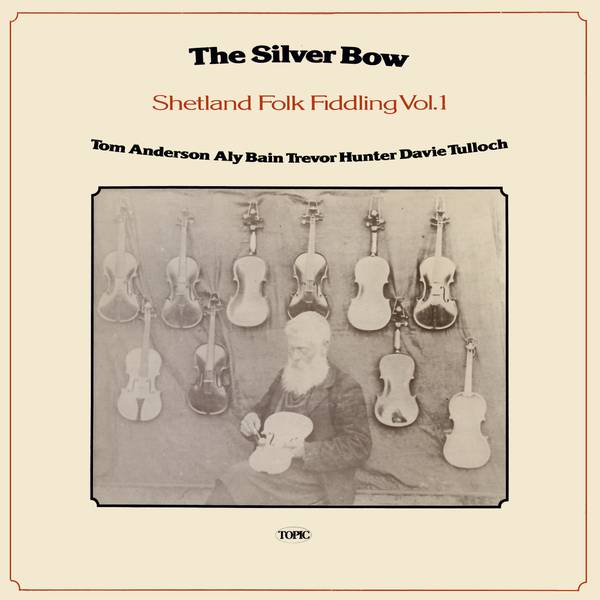
However, I imagine that the original source for the tune is probably Ringing Strings by Tom Anderson, the Shetland fiddler who taught, amongst many others, Aly Bain. It reminds me as well of a piece of Gaelic port that I have identified as A’ Cur nan Gobhar às a’ Chreig and there’s a clip of Capercaillie performing a version of it on BBC Alba. It’s also the first tune in this clip of a session from the Summer Isles Festival:

The tune title refers to a the location of a fishing ground, da Vong being a rock I believe and sits quite nicely on flute and whistle. We had a look at some places to play cuts, rolls and casadhs (as defined by Geraline Cotter) within the tune. FluteFling class resources for the tune can be found on the usual page. There’s some discussion on The Session about the tune and this link to Aly Bain playing it:

In the class I mentioned Millie Godger, a Shetland tune with no set time signature that may have been a “mill tune” and imitated the rhythms of the mill. I couldn’t get to grips with it from the written music, but here’s a lovely version by Morag Brown in a set of Shetland tunes:

Photo: More Shetland Magic Light by Pete and Lynne, some rights reserved.