A strathspey: The Braes of Mar

This is a four part strathspey that sounds very much like a pipe tune but the fourth part drops below the piping range, suggesting that this may be a fiddle setting.

The Fiddler’s Companion confirms that the itself tune is old, having first appeared in the Drummond Castle Manuscript of 1734 as Sir Alexander McDonald’s Reel and later printed in Bremner’s Collection of 1757 as Sir Alexander McDonald. It has traveled to Canada and Ireland and exists in many forms under different names, including as as fling and as a jig. Some say the Devil’s Dead is a well-known song in Ireland that is set to this tune.

I first learned this as an Irish two-part reel that I later realised was a fling. I then found it was a strathspey and discovered from Edinburgh fiddler Doug Patience (now in Meenross, County Clare) that it had a third part. And finally, years later I learned it had a fourth part. It seems that 2, 3 and 4-part versions are common.

The most frequent decoration here is cuts and casadhs (a late double grace note), but there is an opportunity to roll in the third part on the high E in the opening phrase and later in the 4th part on a low E phrase near the end. Keep a regular pulse throughout with the breath and it’s OK to tongue the shorter parts of the scotch snaps to give them more punch. Look out too for opportunities to put in a brief pause on the longer parts of the snaps.

The resources for the tune can be found on the Resources page for this year’s classes.

Photo: Native pine at Glen Derry, Mar Lodge Estate. Copyright C Mills 2013. Used with kind permisssion.
A Hebridean rowing tune

The new term began last night with one of a handful of rowing tunes that I am aware of. Iomramh eadar Il’as Uist (Rowing from Islay to Uist) was originally published in 1815 in Captain Simon Fraser’s collection — perhaps my favourite of the older collections. If you don’t have it, a PDF of a later edition can be found on the International Music Score Library Project.

The Skye Boat Song is the best known of these tune types (see the interesting history of it on Wikipedia) and the Arran Boat Song is widely played but Rowing from Islay to Uist perhaps less so. I first heard it on Ossian’s St Kilda Wedding (highly recommended) and it has been recorded by others since.

Ossian played it in Am but it fits the whistle and flute well in Bm. It is usually written out in a slow, rocking, 6/8 time and it is often described as a jig due to this. 3/4 makes sense to me but I have adhered to the original time signature. It’s a long way from Islay to Uist, so take your time with this one. The weaker c# notes on our instruments can be bent to good effect.

Resources for the tune can be found on the Resources page for the classes.

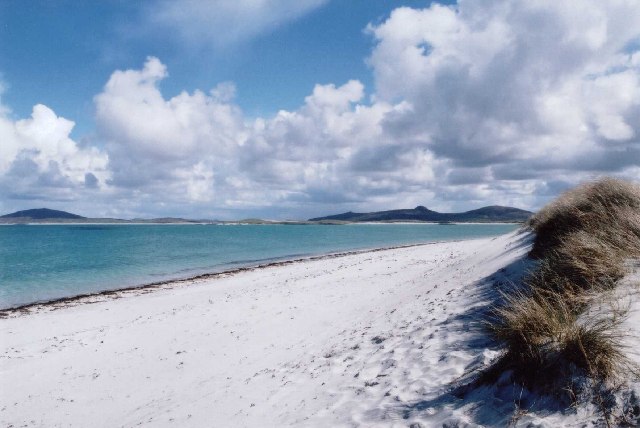
Photo: North Uist near Solas by Scot Tares, some rights reserved.

Summer term begins this week

Pentland Spin by Barney, on FlickrA quick update to remind everyone that the Summer term resumes this week with the Slow and Steady class. The Improvers and Beyond class resumes next week.

There are five classes and no mid-term break. All dates can be found on the Diary page.

A reminder to book for the Scottish Flute Day on 10 May if you haven’t already done so. Booking is not through me, but through Tradfest. The response has been promising and spaces are limited, so make sure you aren’t disappointed.

Image: Pentland Spin by Barney, some rights reserved.


The Sailor’s Bonnet

So we finished the term with the concluding tune of The Tarbolton Set of reels associated with Michael Coleman.

The Sailor’s Bonnet sits pretty solidily in D with some B minor phrases. The first part is repetitive and rhythmic, with the B part flying out high from this with high B rolls possible. The leaps can be quite demanding for the wind player, flutes especially as the notes can easily go out of tune if not shaped correctly. However, it makes for a strong finish to the set and the phrases are relatively straightforward, especially when compared with The Tarbolton Reel.

While it is quite common for D and Bm to go together in tunes, the structure of this reel is unusual as the B part is twice as long as the A part. Certainly it is often played that way.

Alan Ng suggests that the earliest recording is Coleman’s of 1934, however while he certainly popularised it, The Fiddler’s Companion puts Leitrim flute player John McKenna and Sligo fiddler James Morrison as getting there first, citing musicologists Harry Bradshaw and Jackie Small. The alternative title The Highlander’s Bonnet hints at a Scottish connection, but it could simply refer to similar styles of hat.

Resources are up for this tune. Term begins again 24th April. In the meantime, sign up for the Scottish Flute Day on 10th of May while sitting back and enjoying the last two tunes of The Tarbotlon Set:

Image: Sailing on the North-Sea, Germany by Peter Femto, some rights reserved.

The Longford Collector

After the recent challenges of The Tarbolton Reel, the Improvers and Beyond class looked at the next reel in the Michael Coleman set, The Longford Collector.

This tune in G sits nicely on flutes and whistle and offers some scope for variation, particularly in the B part. There is not much known abut this tune, which is strongly associated with this set. There are a few variations on the title, and an account of how Michael Coleman gave it its current title on Alan Kuntz’s Tune Archive web site.

Some information on recordings of the tune can be found on Alan Ng’s site Irishtune.info, which puts the earliest source of the tune as 1936, when it was first recorded.

I have put resources for this tune and The Sailor’s Bonnet up on the Resources page for this year.

Photo: Summer sky in Longford, Ireland by Paul Wilson, some rights reserved.