The North East Scotland Session Tunes Project 4: Marshall Reel Set

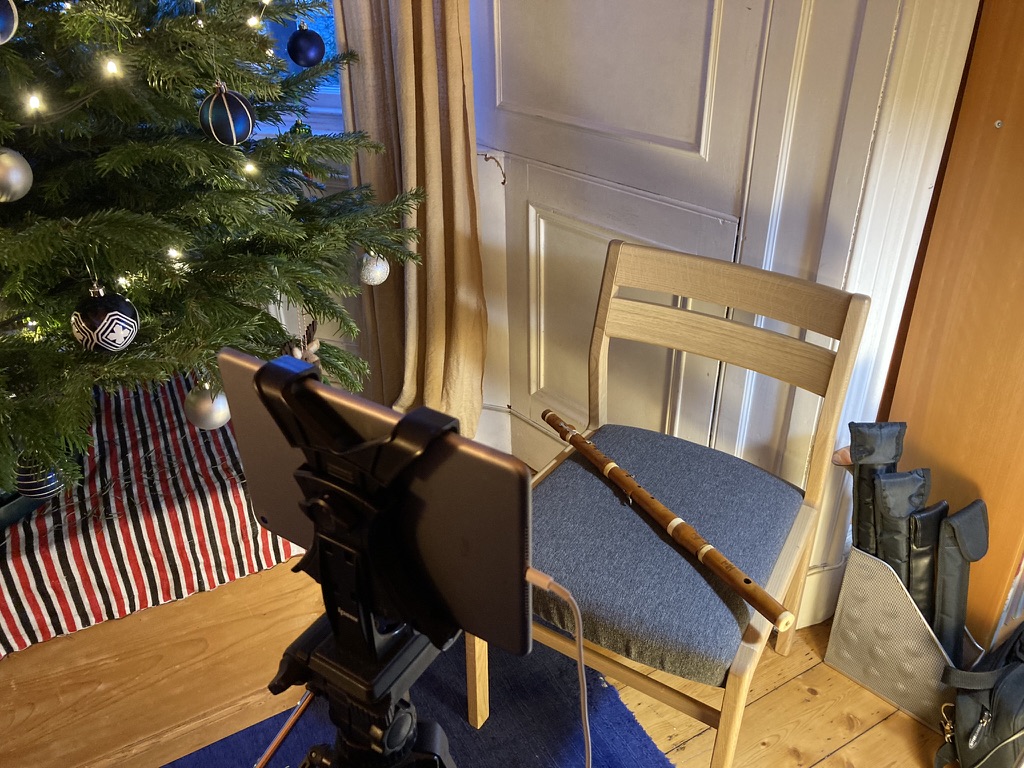
The recording of the videos was squeezed into a corner over the Christmas period. (c) Gordon Turnbull

FluteFling NE Tunebook Project: 04 The Road to Berwick / There’s Nae Harm Done Guidewife/ Mrs Brown of Linkwood

This fourth video of the NE Scotland Session Tunes Project features reels composed by 18th Century fiddle composer William Marshall.

For background to the project of 10 sets of tunes being recorded over 10 weeks, and to see the first video, start here. Alternatively, go straight to the videos on my Youtube channel.

You can download the free PDF of the sheet music here:
FluteFling Aberdeen 2019 NE Scotland Tunes


Marshall Reel Set

This fourth video in the project features three reels from the FluteFling NE Tunebook of Scottish session tunes for flute and whistle. I play these on my Astor flute in D.

William Marshall
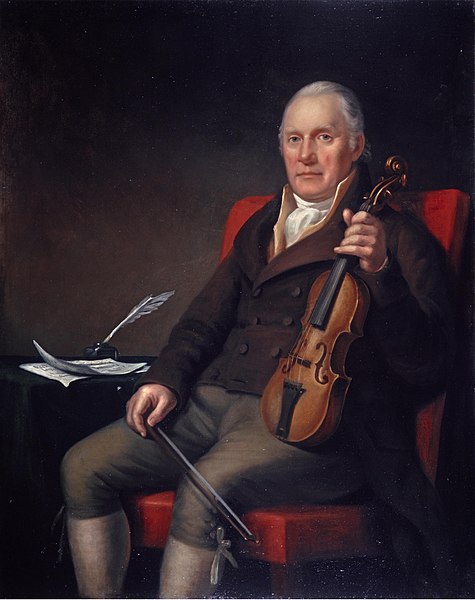
William Marshall (1748-1833), Violinist and composer

William Marshall (1817) by John Moir (1775–1857), from the Scottish National Portrait Gallery

William Marshall (1748 – 1833) hailed from Fochabers in Aberdeenshire and is regarded as one of the most important fiddle composers in Scotland, alongside the Gow family, James Scott Skinner and others. Praised by Robert Burns, he worked for the Duke of Gordon and one of his roles was to compose music for the Duke during a golden age of Scottish music.

Aberdeenshire fiddler Paul Anderson has a YouTube project where he goes through every single William Marshall composition once so you can hear how they should sound. His channel is worth exploring, and is recommended for anyone curious about the strong NE Scotland fiddle style.

About the tunes

This set of reels presents some tricky problems for flute and whistle players. I didn’t know any of these tunes prior to this project, and it will take a while longer before they are completely fluent under my fingers.

This is true of course for any newly learned tune and the process for me is also slower when I learn from printed music than if I learn by ear. The next stage is to try playing the tune away from the music. There are a few ways to do this. I tend to keep the sheet music nearby for reference and go over the tune, pausing at any sticky transitions between the phrases, repeating them and slowing down to encourage the fingers to move correctly.

If you are particularly reliant upon the sheet music, try placing the music stand progressively further away from you as you go over the tune. The individual notes become harder to make out, but you will still see the general rise and fall of the melody. Surprisingly, your brain already knows what to do and at one point you will reach the sweet spot where it becomes harder to read the music than it is to remember it. It’s a process of trusting yourself and developing confidence, but definitely worth persevering with as you develop your skill in this area.

The next key stage for me is to move away from visualising the printed music and instead to understand the feel of the tune. This may take a while and the incipits in the PDF can prompt the recall of the opening bars to help trigger the phrases that come next.

Reels are played with a bit of pace, but don’t be tempted to race away with them. All three of these tunes have dotted phrases and keeping them slower allows you to better integrate them into the music. When played faster, there is less time for each note, dotted or otherwise, and the rhythm tends to become ironed out. And of course, speeding up is a common feature of sessions, so practising and learning slower is the opportunity to keep your technique secure

The Road to Berwick is in D and was first published in 1781. It was renamed The Buck of the Cabrach in an 1822 collection. Cabrach is an area near Fochabers in Aberdeenshire, whereas Berwick probably refers to Berwick upon Tweed in Northumberland, right on the Border with Scotland.

Points to be aware of when learning this tune:

  • Octave drops: e-E and d-D
  • The ascending phrase in the penultimate bar of the B part could become confused with the corresponding bar in There’s Nae Harm Done Goodwife (the second tune). Consider taking time to work on both of these and how they connect to the preceding phrases of their respective tunes.

Also published in 1781, There’s Nae Harm Done Guidewife is also in D and was possibly dedicated to his wife. See The Fiddler’s Companion (a precursor to the Traditional Tune Archive) for some more information. Note that there are a few different spellings of the title — Guidewife/ Guidwife/ Goodwife — the PDF for this project uses two different spellings, for example.

Points to be aware of with this tune:

  • The opening bars of a tune in a set are important in communicating a change to other musicians and to dancers and should be strong. In the A part this combines octave jumps and snaps with use of the G# key that gives the rising phrase an extra lift. It can be tricky but is effective.
  • Where a passage presents problems, work on it in isolation. Take each bar on its own and then combine them with others to get them to work together. In this instance, understanding where the tune goes from there will help make this a secure opening.
  • The B part is relatively straightforward, although again, be aware of the penultimate bar and its similarity to The Road to Berwick. Once more, consider taking time to work on both of these and how they connect to the preceding phrases of their respective tunes.

Mrs Brown of Linkwood is in E minor and was possibly first published in 1822. The title honours a woman associated with the founding of the Linkwood Distillery in Elgin, which still still produces whisky to this day.

The reel runs easily, almost like some Irish polkas, and has a snapped phrase and a phrase that uses D#, both of which recur within the melody.

The use of D# ties the tune in with musical tastes and sensibilities of the 18th Century. It appears in several tunes of that period and also in the classical music of the time. I have come across some tunes where this has been dropped in more recent times, resulting in more than one version of a tune.

If you don’t have a D#/ Eb key, the tune still makes musical sense and it would be possible to play it with others if they had also understood that the D# is not to be played. However, it would not only lack the lift that the D# phrase introduces but also clash if others were playing the D#.

Similarly, this version in the National Library of Scotland has more dotted phrases that are not in the version we are learning and to my mind give it a stronger feel of modern Irish polkas.

I mention the Irish connection not because I think that the tune is somehow directly related to Irish music, but because the large numbers of flute players in Ireland makes it easier to find examples of how such phrases might be played. As flute players we can then use our judgement to bring that into Scottish playing where we think it can be effective. If you’re looking for an introduction to Irish flute playing, there are many guides online, but begin with Brad Hurley’s site.

Be sure to check out John McKenna, who was very influential in the early 20th Century. Some of his playing of Irish polkas includes tunes that Scottish musicians would recognise and his breathing and rhythm are of particular interest to flute players in Scotland. Here’s something I wrote about him a few years ago.

More than one version of a tune?

The other lesson here is that there tends to be more than one version of any tune played in traditional music. This could be due to different instruments, regional and individual styles or the folk process shaping it across the years and centuries. As so much of Scottish music has been in print for a long period, different editorial hands have also been involved, sometimes changing a title or making adjustments to suit personal or audience taste and not always in a way that appeals to our times. Sometimes too, there are just plain mistakes and errors that are then copied and repeated.

So, be aware when playing with others, that they may play the tune differently to you. This may be that they have a different version, their instrument is different or their individual style is (e.g. they have been influenced by different musicians).

In sessions, deference is given to the musician that starts the tune and the trick then is to get in step with them by adapting your playing. If they aren’t a confident player, then doing so supports them and avoids dominating their music. Entrainment is how musical communities and styles evolve and develop. There’s there’s quite a science behind it as this study from the University of Durham shows.

There’s also plenty of discussion about session etiquette to be found online, much of it heated.

Ten weeks of videos

Over a 10 week or so period, I am recording and uploading to YouTube a set of tunes from the PDF roughly once a week. The aim is to introduce the tunes, point out some techniques along the way and then play them as a set as I might play them in a session.

As I go along, I’ll take in suggestions to improve the sound and presentation and get back into the way of teaching again. There is an in-built slow down function in YouTube and the PDF is available to everyone, so why not join me on the journey?

Look out for some more tunes next week. In the meantime, enjoy the music!

The North East Scotland Session Tunes Project 3: 6/8 Pipe March Set

Sharon Creasey and John Gahagan at a session in Aberdeen, November 2019 (c) Gordon Turnbull

FluteFling NE Tunebook Project: 03 PM Donald PM Donald MacLean of Lewis/ Bonawe Highlanders

This third video of the NE Scotland Session Tunes Project features 6/8 pipe marches for the Highland bagpipes.

For background to the project of 10 sets of tunes being recorded over 10 weeks, and to see the first video, start here. Alternatively, go straight to the videos on my Youtube channel.

You can download the free PDF of the sheet music here:
FluteFling Aberdeen 2019 NE Scotland Tunes


6/8 Pipe March Set

This third video in the series features two Highland pipe marches from the FluteFling NE Tunebook of Scottish session tunes for flute and whistle. I play these on my Burke whistle in D.

These tunes are often mistakenly referred to as jigs due to being in 6/8 time, but they are marches and should be played at a regular, steady pace, not too brisk, but brisk enough to invite moving purposefully. These types of tune are also often played for particular ceilidh dances and that’s what I have in mind as I play them.

PM Donald Maclean of Lewis was written by Donald McLeod, a composer of many fine tunes for the Highland pipes. It’s a finely constructed four part tune where parts 2 and 4 are closely related to each other. G is natural in this tune, which helps it to fit nicely under the fingers. As in all of our sets so far, an octave jump features, this time A-a. On the whistle, you may find that tonguing the higher note will help to make it clearer.

PM refers to Pipe Major, which is a role in a pipe band and not to be confused with a military rank. There’s a celebration of Donald Maclean and Donald MacLeod at the Piping Press web site.

There is some dispute about the authorship of The Bonawe Highlanders, which was composed by David Bowman, but some sources give PM John MacColl. See this discussion on The Session and the links given to other discussions, and also the reference on The Traditional Tune Archive. In this case I am going with David Bowman, which is backed up by several other websites. As always, treat any information on the web with caution and compare with other sources. I can find no information about David Bowman unfortunately.

The tune itself is firmly in A but features G# in just one phrase that occurs in parts 2 and 4. Part 4 also has G naturals that contrast with the G#. In Part 3, paying attention to the construction of the repeated rhythmic, hypnotic phrase will help the syncopation pop out of the melody. The tune features a Scotch snap — a dotted phrase characteristic of Scottish traditional music (see Wikipedia to learn more). It’s a sure sign that you’re playing the tune too fast if it can’t be heard or played clearly.

Bonawe is on the shores of Loch Etive in Argyll and is the historic site of an early iron furnace.  In an Aberdeen session, I was the only person not playing this tune, so I’m glad to have finally learned it.

Ten weeks of videos

Over a 10 week or so period, I am recording and uploading to YouTube a set of tunes from the PDF roughly once a week. The aim is to introduce the tunes, point out some techniques along the way and then play them as a set as I might play them in a session.

As I go along, I’ll take in suggestions to improve the sound and presentation and get back into the way of teaching again. There is an in-built slow down function in YouTube and the PDF is available to everyone, so why not join me on the journey?

Look out for some more tunes next week. In the meantime, enjoy the music!

The North East Scotland Session Tunes Project

The Sunday session at Ma Cameron’s, Aberdeen FluteFling 2019 (c) Gordon Turnbull

A music project for the Winter

Everyone needs a project for the winter and an idea I had over lockdown has finally clicked for me. Inspired by elements of the Dig Where You Stand movement, I looked at an underused resource that already existed within the FluteFling archives.

John Crawford put together a couple of PDFs of session tunes ahead of the 2019 Aberdeen weekend with the idea that people would learn the tunes and have a few core common tunes for the music sessions. This made sense because people attending come from different areas and have different repertoires.

The result was a useful document containing 10 sets of session tunes that might be expected to be found in NE Scotland sessions. The resources were drawn freely from those already available online and might even be regarded as standards, from Shetland reels to pipe jigs, strathspeys and more. Despite it being a good idea, we failed to promote the idea enough and then the pandemic came along and swept things away.

During lockdown I looked at John’s PDF again and realised that it would be useful to learn  those tunes that I didn’t play properly. Recently I also felt I needed a focus for my playing as I haven’t been in sessions for a long time and nor have I been teaching. So my FluteFling NE Session Tunebook Project was born.

Ten weeks of videos

Over the next 10 weeks or so, I will be recording and uploading to YouTube a set of tunes from the PDF roughly once a week. The aim is to introduce the tunes, point out some techniques along the way and then play them as a set as I might play them in a session.

As I go along, I’ll take in suggestions to improve the sound and presentation and get back into the way of teaching again. There is an in-built slow down function in YouTube and the PDF is available to everyone, so why not join me on the journey?
You can download the PDF here: FluteFling Aberdeen 2019 NE Scotland Tunes

FluteFling NE Tunebook Project: 01 Hurlock’s Reel / Da Rodd to Houl

Two Shetland reels by fiddler Tom Anderson, the first of these I associate with Cathal McConnell’s flute playing with The Boys of the Lough, with Shetlander Aly Bain on fiddle. Composed in 1938, Hurlock was apparently the drummer in the ceilidh band Tom Anderson played with. There is discussion and other settings on The Session website.

Hurlock’s Reel is in A and I use the G# key on my flute. See the video and video notes for some more discussion on the keys I use.

Da Rodd to Houl is in D (not G as suggested in the video). Houl  (sometimes spelled Houll) is on the Isle of Whalsay in the Shetland Islands. Shetland has its own language (Norn) and dialect; “da rodd” means ” the road”. This comment on The Session website gives more information:

In “Haand Me Doon Da Fiddle” Tom Anderson says “Dis tun was written in 1936 whin I came up to Unst to visit a schoolmaister friend o’ mine. It happened it dat moarnin wis da prizegiving an I was axed to play at it. I guid fir a walk an da tun cam in me head. Da place I wis walkin ower wis caaed da Houll Road bit I tocht da Road ta Houll soonded better”

I’ll try to record and upload the tunes in the order that they appear in the PDF. Look out for some Shetland jigs in the next week or so. In the meantime, enjoy the music!

Remembering Boxwood Aberdeen

Scottish Flute Weekend 16-18 Nov 2001: Twenty Years of Scottish Traditional Flute

Malcolm Reavell in Ma Cameron’s snug, Aberdeen. (c) Gordon Turnbull

November 2021 marked twenty years since Boxwood Aberdeen took place, a weekend that sowed the seeds for FluteFling and inspired many others to further explore the flute in Scottish traditional music contexts.

Organised by Malcolm Reavell for Scottish Culture and Traditions, here he describes the background to the event, which was possibly the largest such gathering in Scotland.


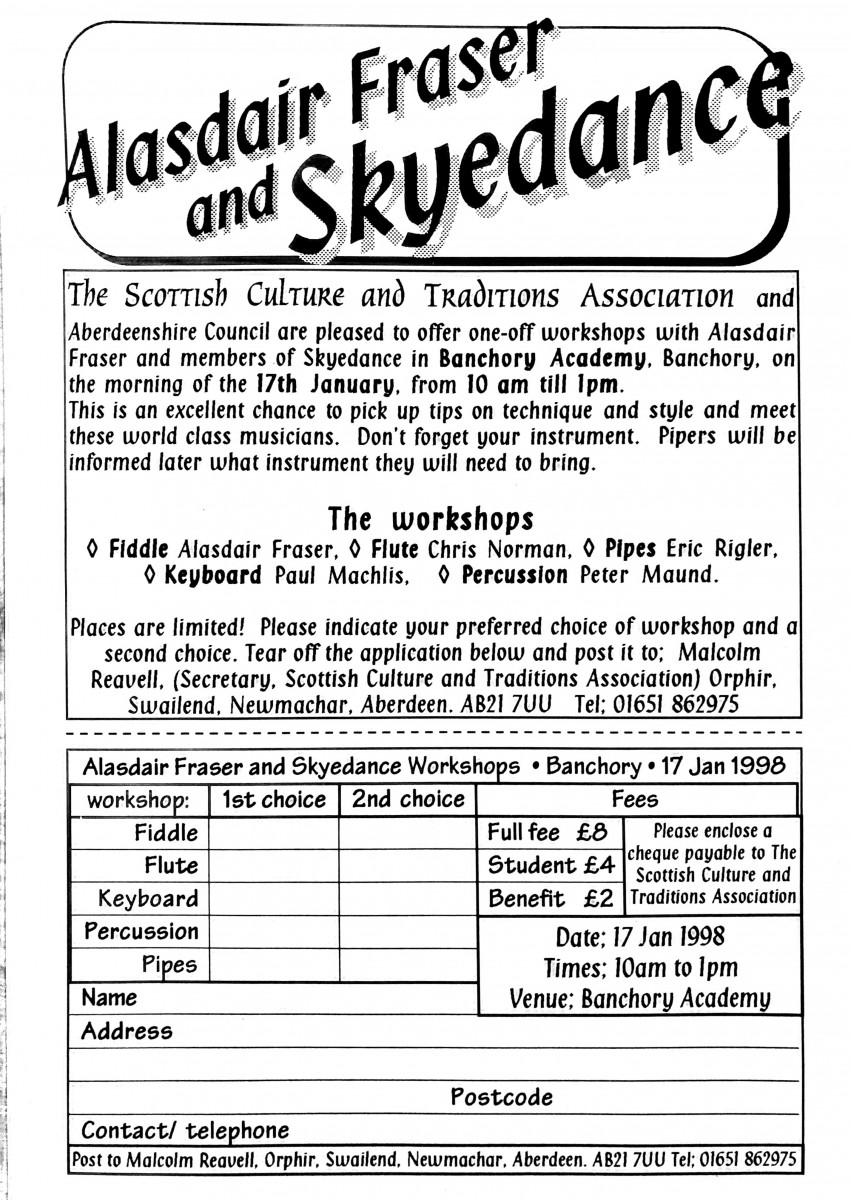
Publicity for Skyedance performing and teaching in Banchory

Publicity for Skyedance performing and teaching in Banchory

In 1997, representing Scottish Culture & Traditions organisation (SC&T) I contacted Duncan Hendry who was at the time managing the Aberdeen Alternative Festival (now at the Edinburgh Festival Theatre) to see if he would help us arrange to get Alasdair Fraser’s band Skyedance to run a day of workshops for traditional musicians. The lineup at that time was Alasdair on fiddle, Eric Rigler on pipes, Peter Maund on percussion, Paul Machlis on piano, and as American/ Canadian flute player Chris Norman had joined the band, we could have flute a workshop as well.

The workshop was held on a snowy January day in Banchory Academy. Chris Norman had previously held workshops at Celtic Connections in Glasgow, attended by just a couple of people, so when he walked into the room, he was pleasantly surprised to be confronted by about a dozen flute players.

Flute players in Banchory

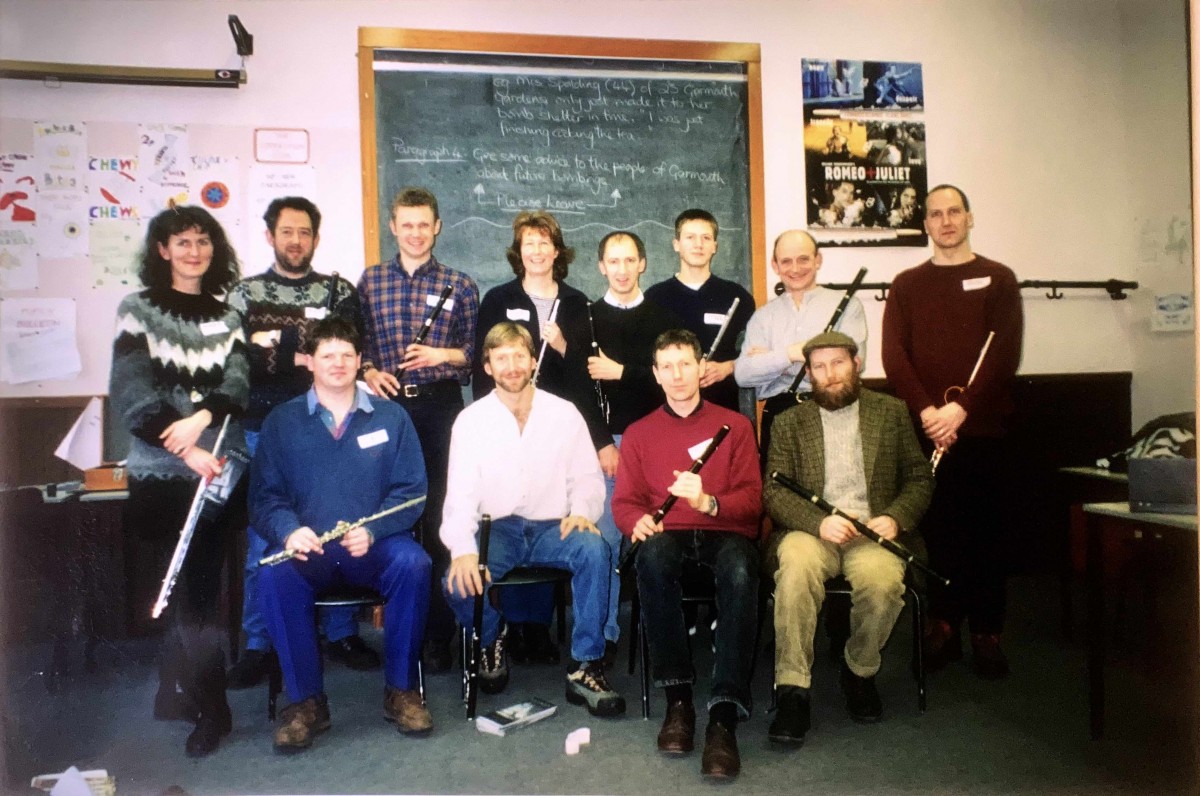
Flute players in Banchory. Chris Norman is front row, in white. Malcolm Reavell to the right of him.

Chris advertised the Boxwood week he ran, and so that was where I went for my holidays the next two years – Lunenburg, Nova Scotia. It was an inspiring event, and I really wanted to do something like this in Scotland, and I got the chance in 2001. Chris got in touch about coming over to Scotland, I jumped at the chance to try and organise something.

I thought it would be good to try out the format Chris used for Boxwood with three tutors covering different styles and traditions. As well as Chris I invited Eddie McGuire whose reputation as composer as well as flute player appealed to classical flute players, and from Limerick, Niall Keegan, who was pushing the boundaries of traditional Irish flute playing.

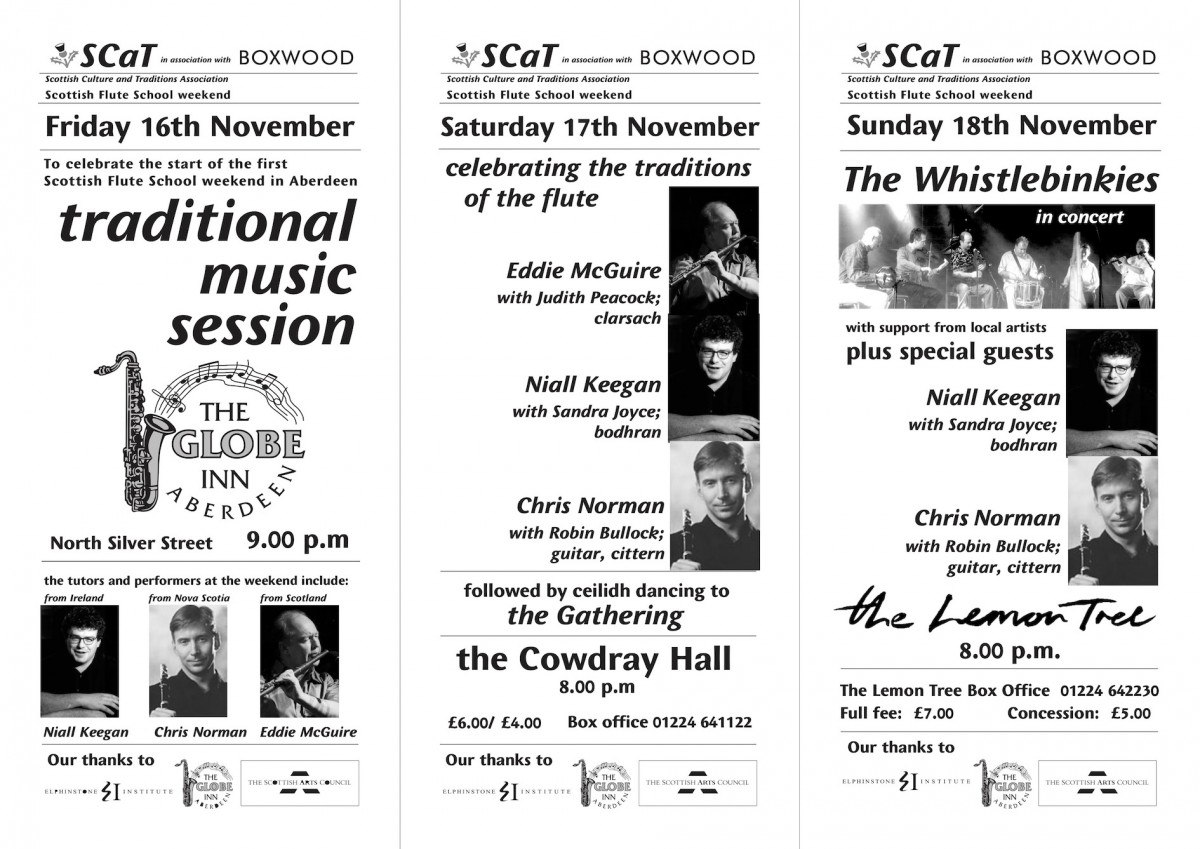
Flyer for the Boxwood Aberdeen Weekend

Flyer for the Boxwood Aberdeen Weekend

It was going to cost a bit of money to put on the event. We could not run it for a whole week as Chris did in Lunenburg, but a weekend seemed achievable.

At this time I was still working shifts as an aircraft engineer, so I had days off during the week which I could devote to SC&T (in fact SC&T took up most of my spare time anyway).

I investigated Scottish Arts Council funding and luckily Dave Francis pointed me in the direction of a new funding stream for which few people had applied.

I submitted the grant application and budgeted for about half of the amount I put in the application (that’s kind of normal for such applications). The Scottish Arts Council approved the whole amount. This was not supposed to happen! I had to then revise the programme and remove all the cost saving I had incorporated to use up all the money we were getting (you can’t give it back – you must spend it!).

So… venues for workshops, evening concerts, sessions, accommodation for artists, publicity, leaflets, press releases, flyers, catering,… the machine was set in motion. It wasn’t all plain sailing, I had several weeks, and a few frantic days, sorting out last minute international work permits with the UK Home Office.

Organising it under the SC&T banner gave us access to volunteer resources of the SC&T committee and helpers. The Elphinstone Institute under the auspices of Dr Ian Russell became involved, and Ian gave a talk on the flute bands of NE Scotland. (a photograph of one of the flute bands was used by Chris on his album cover for The Caledonian Flute).

Kenny Hadden helped put out the word to all the flute players we could find in Scotland, and by some magic, we managed to attract participants from the south of England, and one lady (who I had met at Chris’s Boxwood event in Lunenburg) that decided to come all the way from Wisconsin in the US.

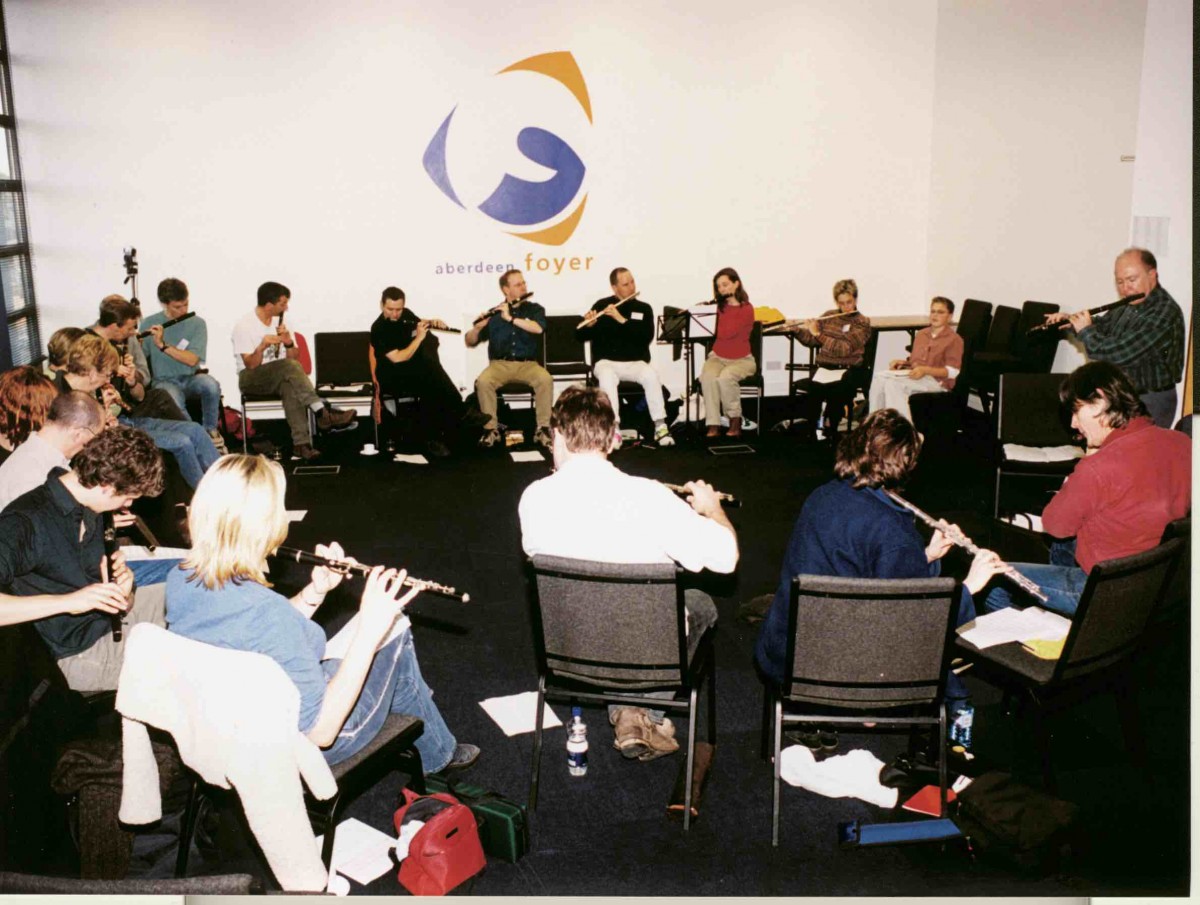
The workshops took place in the Aberdeen Foyer. We had an evening concert in Cowdray Hall, and one in the Lemon Tree, and Friday night session in The Globe.

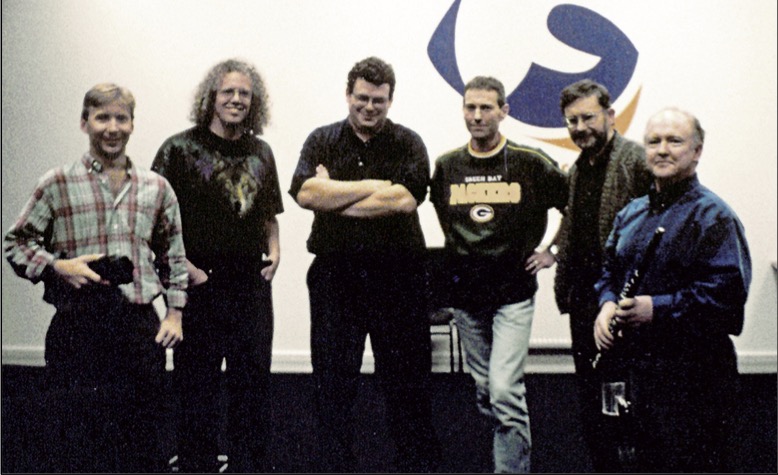
(Left to Right) Chris Norman, Robin Bullock, Niall Keegan, Malcolm Reavell, Dr Ian Russell, Eddie Maguire

The weekend was the first time this number of traditional flute players had gathered in Scotland and acted as inspiration to continue from there. A young Calum Stewart was even in the audience, (although he told me recently, at the time, he didn’t play much flute).

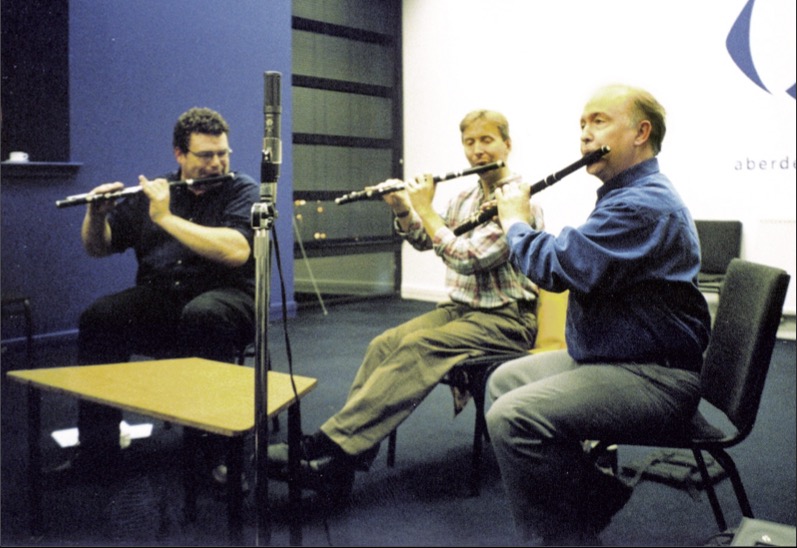
Niall Keegan, Chris Norman and Eddie Maguire performing

I can’t remember how many participants we had at the weekend, (data protection means I no longer have access to enrolment details), but I seem to have the number 45 in my head.

As for names… well, have fun looking through some of these pictures and try putting names to faces, and a video of the weekend was made by Dr Ian Russell and we hope to make some of it available in the future.

Eddie Maguire and the Whistlebinkies with the participants. Notice the animated music stand. (c) Malcolm Reavell

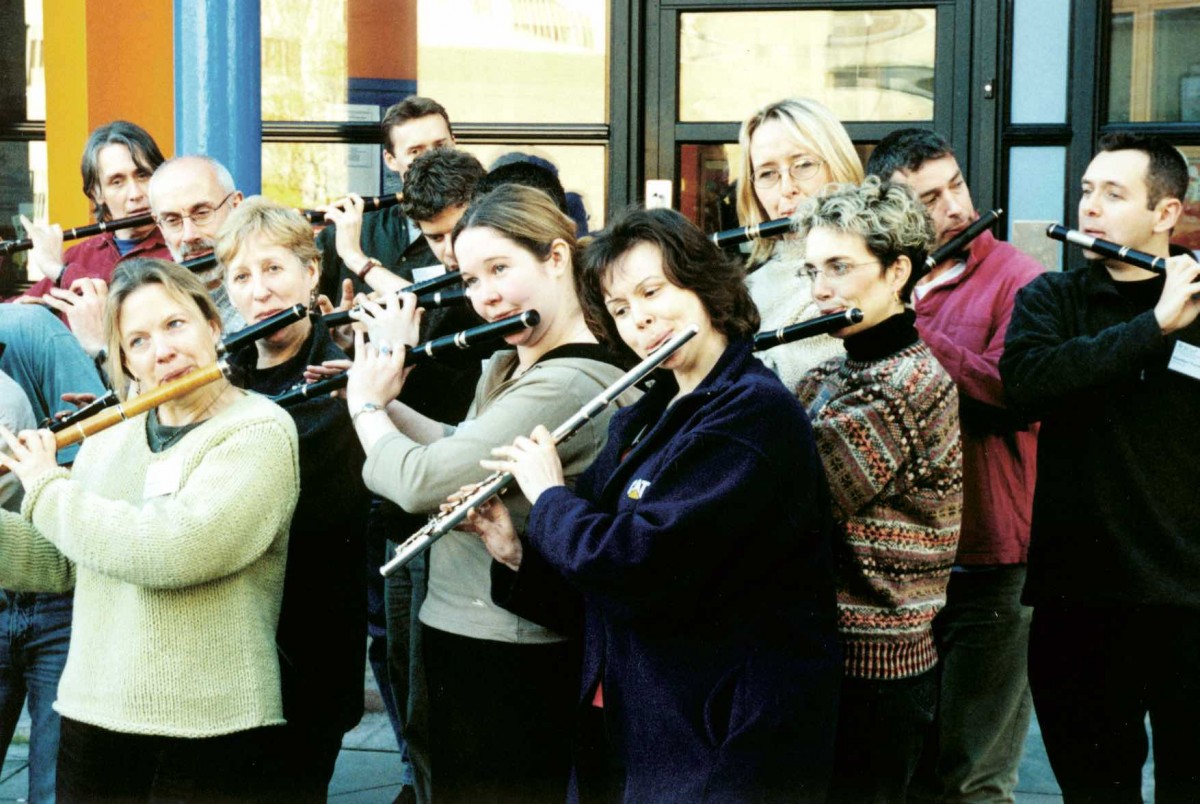
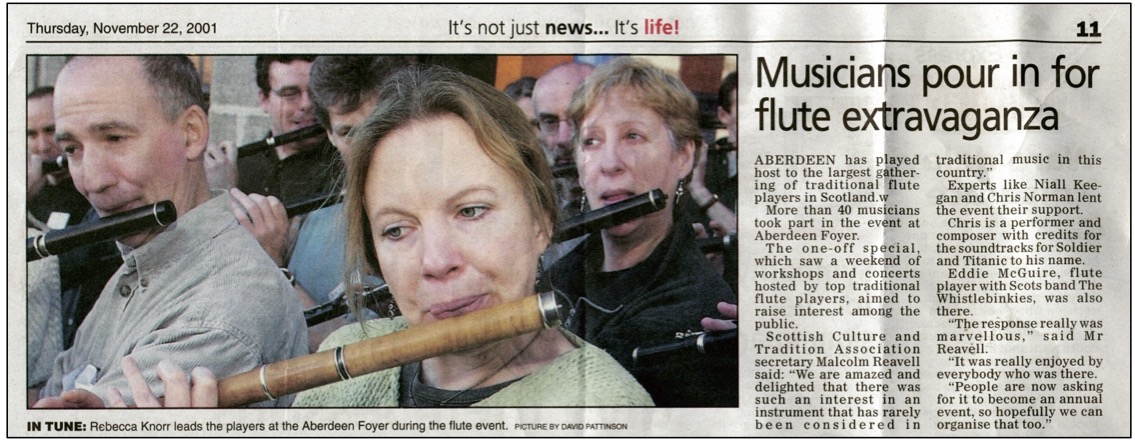
Aberdeen Press and Journal. Some weel kent faces here: Rebecca Knorr (left) and a young Mhairi Hall centre left, Ann Ward just behind them, a young Calum Stewart (partly hidden behind Mhairi), Munro Gauld and Gordon Turnbull (back right). The lady in the Fairisle pattern sweater is Ann Huntoon from Wisconsin. Apologies for not being able to recall other names at present.

Aberdeen City Evening Express a few days later: Kenny Hadden, Rebecca Knorr and Ann Ward front and centre.

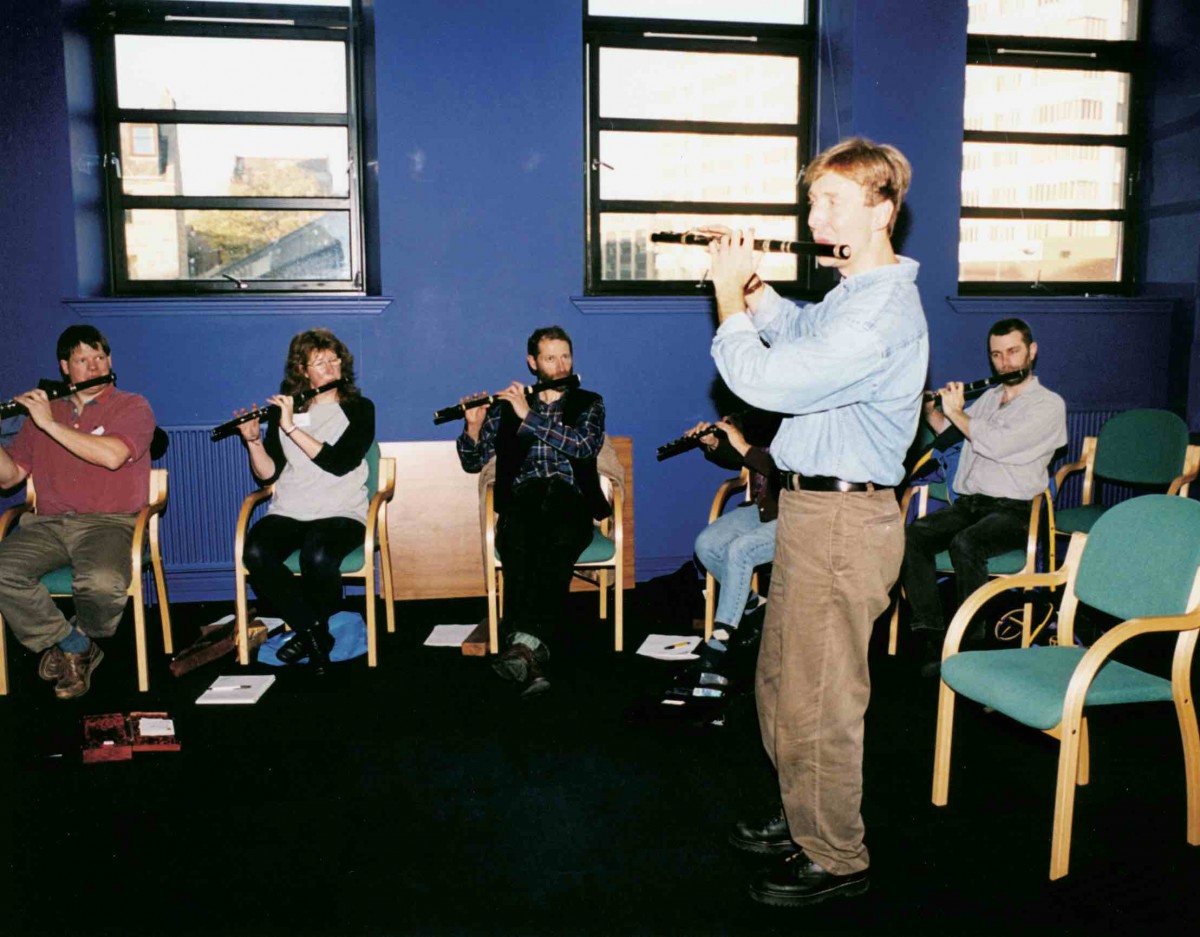
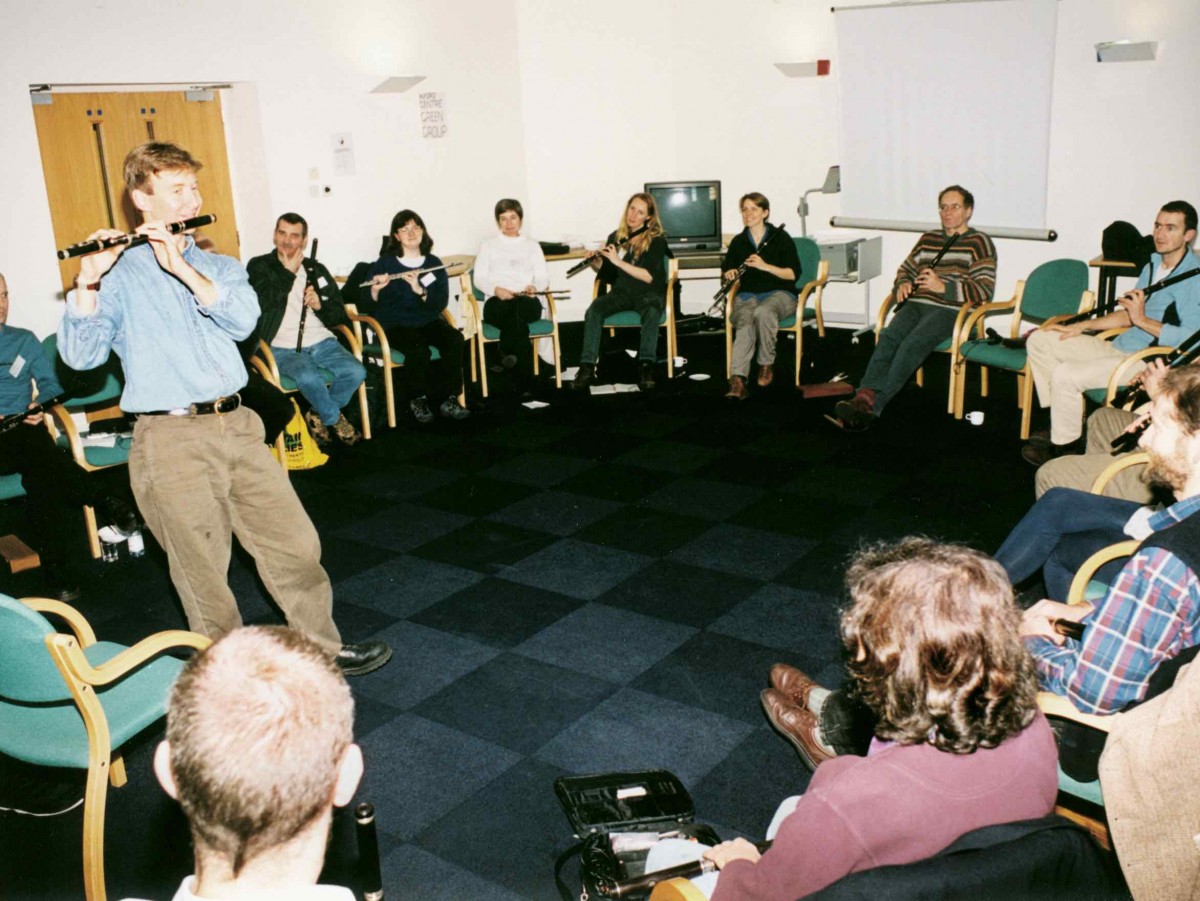
A workshop with Chris Norman. Pete Saunders back, right.

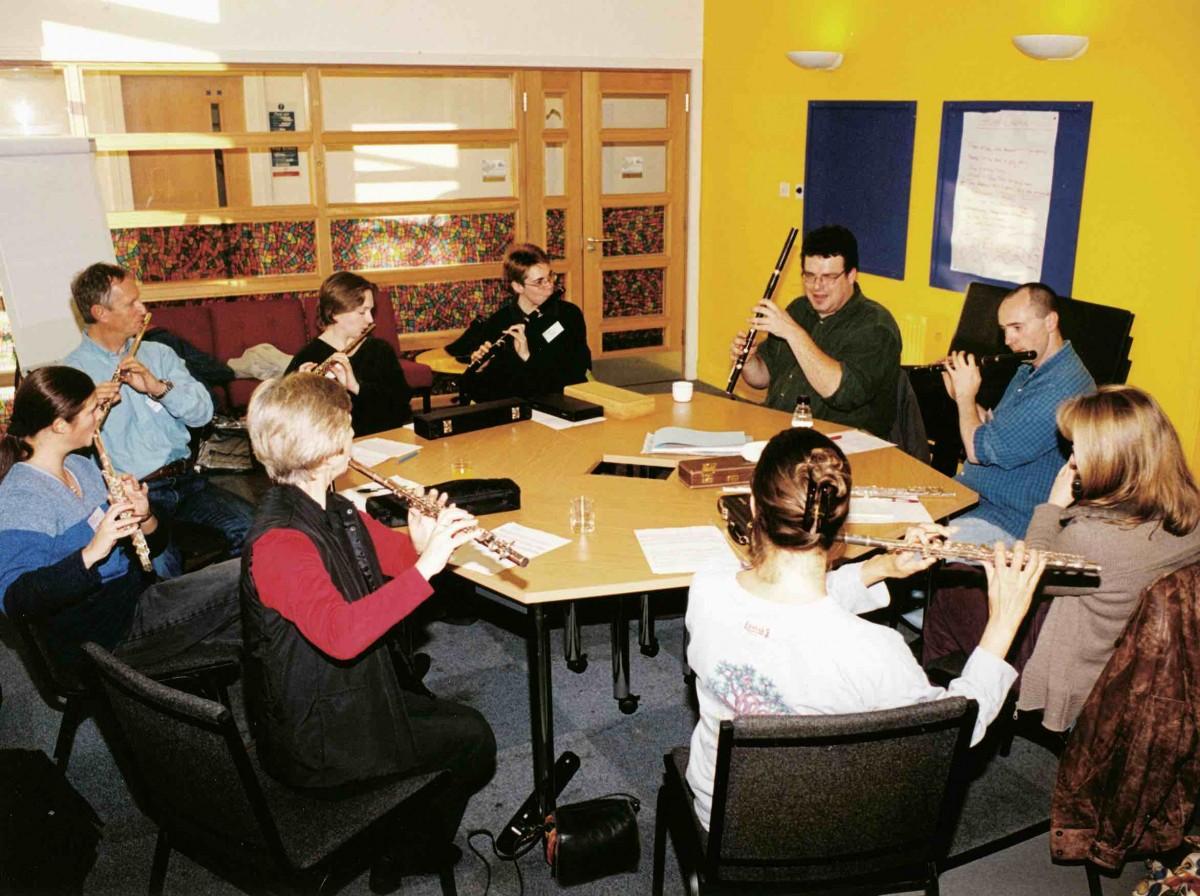
Some more faces to spot, this time with Eddie Maguire.

Chris Norman in a workshop

Niall Keegan with a group

The participants at the end of a full day animated and ready to listen to the three tutors.

(c) Malcolm Reavell 2021

FluteFling online with Claire Mann

The first FluteFling Online event took place in December with a mini-series of workshops led by Claire Mann. The event marked what would have been a weekend event in Aberdeen and attracted a great turn-out, with participants from across the world.

When John Crawford approached me in September and asked what the plans were for the FluteFling Aberdeen Weekend, which usually takes place every November, I confess that my heart sank a little. It was a good question and needed addressing in some way, but it meant that we had to bite the bullet as so many have done and dive into the Online experience.

What did we know about putting on such things? Had we attended any? I personally had shied away from teaching online so didn’t really know what was involved. In addition, so much our working and personal lives are lived online during the pandemic, did we want to spend our spare time wrangling with setups, links and connections? And each of these questions seemed to have others lining up behind them. Wasn’t there online fatigue? Or was that just me?

John has been involved in the FluteFling weekends for many years and has been active in the Aberdeen event too and links up the Aberdeen flute community. He brought in fellow FluteFling supporter Pete Saunders, who has been running the SCaT flute and whistle classes in Aberdeen online this autumn and the technical experience and confidence that was needed. John had also attended a number of online workshops over the summer and had been taking plenty of notes of what worked well.

Over Zoom calls and emails with Sharon Creasey and Kenny Hadden, we realised that it was doable with manageable risks. We quickly identified Claire Mann as a tutor we wanted to involve and with her we were able to shape an event. We all wanted it to be a little different and supportive of those facing the common experience of not being able to meet and play music with others, having to dig deep for inspiration and motivation.

The result was a two-weekend event just towards Christmas. People were unlikely to be going anywhere during the pandemic and we felt that a week between the two workshop days gave people time to work on the material and learning, whatever their commitments. Providing the music and recordings from Claire a week in advance extended the learning focus and we extended it further by including a joint recording project for a video that will be completed soon.

The workshops were timed to be short and focused to avoid fatigue, which meant that they flew by an a lot was packed in as Claire took us through some choices from the online archive of the William Gunn Collection and Shetland reels. The Q&A session became highly technical as Claire responded to questions about rolls, cuts, strikes and alternatives with ease and clarity.

An unexpected development came from those looking to attend from USA and Canada. We had timed the workshops to be either side of lunchtime here in Scotland, but this was still 4 in the morning for some people, or even earlier. To attend at that time was a level of commitment that we hadn’t expected and we responded by recording the workshops and making them available to attendees for several weeks afterwards.

The implication for data protection was a concern and we had to seek consent. However, the way we ran the workshops helped enormously. Pete was a co-host and managed all of the running technical concerns — anchoring the workshops, muting participants and fielding questions through the chat facility. It meant that Claire could focus on the teaching, which was new to her in this setting too. The format was a success and was raised by a few as such in the feedback.

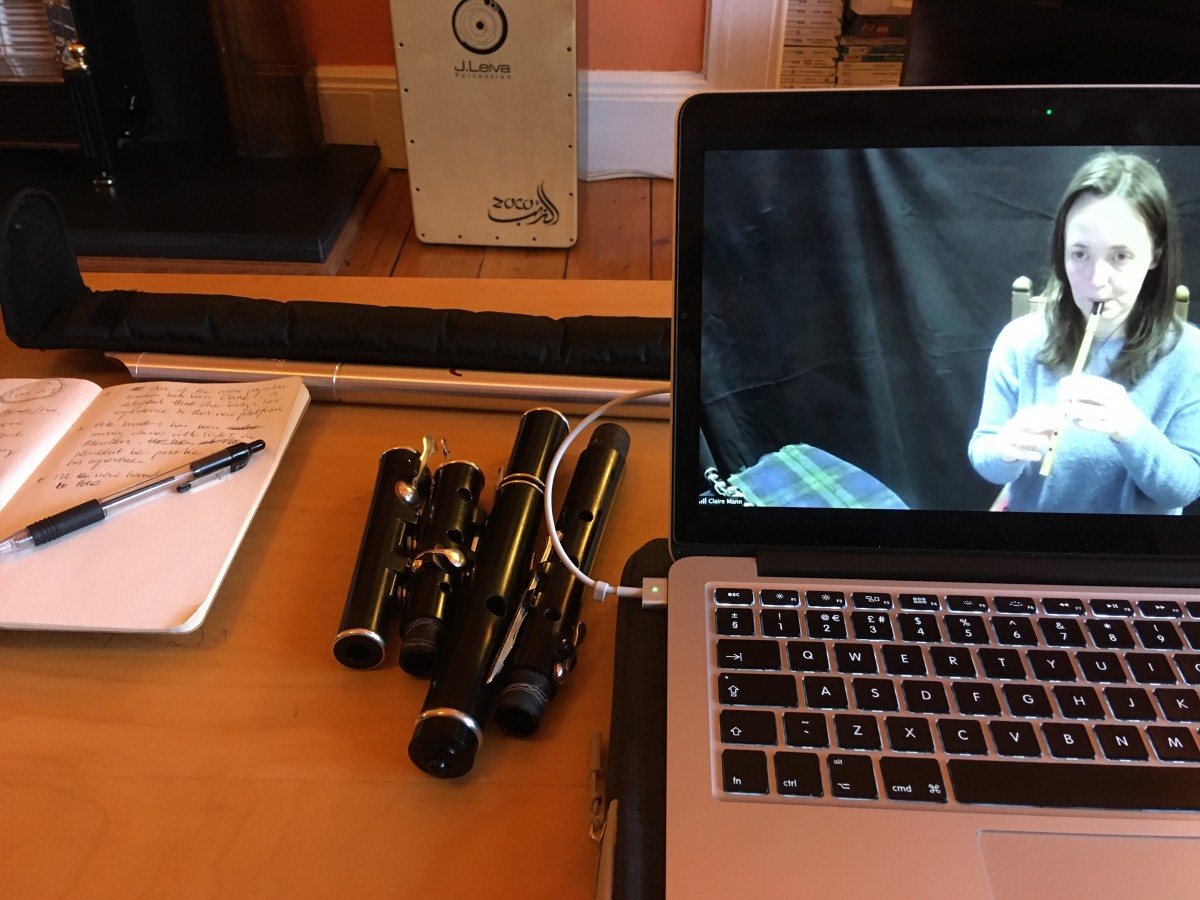
Claire Mann teaching online. Photo: (c) Gordon Turnbull

We were quite unprepared for the response, which was overwhelming. With over 70 participants, this was by far and away our biggest event and has caused us all to positively review future plans, including when we all get back together in person.

As participants began joining in the online session, people recognised each other and began chatting and creating a buzz. We have all seen each other on social media, but here we were again, with new faces coming in, some familiar names that are on our mailing lists but are never able attend. People spoke about the friendliness, as visitors from around the world logged in — from a chilly Niagara Falls to Spain, France and Germany. Meanwhile, Claire was in Newton Stewart, Pete was in Aberdeenshire and I was in Edinburgh. There was a definite community feel that spanned the globe.

The recordings enabled people to revisit the workshops and review the learning but also enabled those in California and Japan to be part of the event. Additionally, some people couldn’t attend all of the workshops or had to change plans at short notice, but didn’t miss out. In a non-online situation (IRL – in real life), these people couldn’t have attended or would have lost money or needed a refund.

Our eyes have been opened and while there is no substitute for an IRL experience, this has proved to be a decent substitute with a lot of potential. We are already in the process of organising our next event and what we continue to learn we will be taking into the regular workshops when they are able to resume. Can they be live-streamed or recorded? Or can they be sit alongside our regular events diary? Maybe, maybe.

In the meantime, look out for the video and also for news of our next event.