Flutes face potential problems post Covid-19

One of the questions that has cropped up in Covid-19 conversations amongst flute players and their friends is — how safe are we? As we begin to learn more about this aerosol-borne virus, singers and wind instrument players — flutes, whistles and bagpipes included — are being seen in a new light. Could a wind musician potentially spread the virus more widely than other musicians?

We don’t yet know the answer, but for flutes and whistles, splitting the airway through the far edge of the embouchure or the fipple is how the sound is generated. Air also escapes at the tone holes and at the end of the instrument. How fast is the air and how far is the air projected? Studies are ongoing but this is what is understood at present.

There is still much to be understood and my gut feeling is that the majority of the concerns at the moment relate to the flute and not necessarily the whistle. One speculated thought on the Facebook group is that blowing across the embouchure with force and direction may be an issue. If so, there may be a solution that has the added benefit of being a wind shield AND tone reflector. It’s the Win-D-Fender developed in the USA and carried in a few places in Europe and across the world.

Personally, I hope some additional thought goes into the name and the colour options as it seems functional and clinical (although in a world of PPE and face masks, maybe that is less of an issue). So here are a couple of videos endorsing the product (caveat: I’ve no idea if this works on wooden flutes).

Relating this to sessions, if this is helpful, then the airflow coming from out of the flute may then be the big issue. Sessions are often sight spaces and flutes tend to need more room than others. In a session with increased distancing, that may be a bigger issue. On the other hand, whistles are more self-contained and that may be an advantage.

Finally, on a more upbeat note, my own Lockdown tunes project on YouTube continues. Mostly Scottish repertoire, but not entirely. I hope you enjoy them.
 

FluteFling Fridays

Lockdown Projects

It is early May, the swifts have arrived this week in Edinburgh, meaning that Spring is now moving into Summer. And yet we are still in this stage world of pandemic and lockdown and I hope that everyone is safe and looking after themselves and those they love.

In Scotland we have had 6 weeks of lockdown and the early adrenaline rush that led to panic buying (toilet rolls? what was all that about?) has mostly subsided. I am fortunate in that I am still working, albeit from home. The bay window in our living room has become a low-tech mini studio for delivering content to schools and I am in there most days.

The FluteFling fraternity that is on Facebook now has a small but active community and that has been a good way of keeping in touch for some. I know Facebook isn’t for everyone, but is is one of many ways of keeping things going and supporting each other. Recent chat has included how to roll on F natural, Swedish traditional flute music and the sharing of videos. If you’re on Facebook, the group can be easily found.

Talking of sharing videos, I have a project of my own, to rediscover forgotten repertoire and learn those tunes I never got around to learning. Every Friday I record something and put it up on YouTube. It gives me a focus, even if I don’t feel like doing it and even if I don’t have the tunes *completely* down or the performance fully thought through.

Many of the tunes have been taught in FluteFling classes or workshops, but not always by me. Here’s the latest one and if you head over to YouTube you can catch the rest and future ones too:

Hopefully, you’re able to find your own way to engage with your music, be it videos, going through music books, looking online, recording yourself or just listening to music. A year or so ago I was aware that a number of classical musicians undertook a 100 days of practice challenge whereby they recorded themselves for 100 consecutive days. Over that period, their focus shifted, their performances and technique improved. It’s not for everyone but I liked the idea of commitment to something you care about.

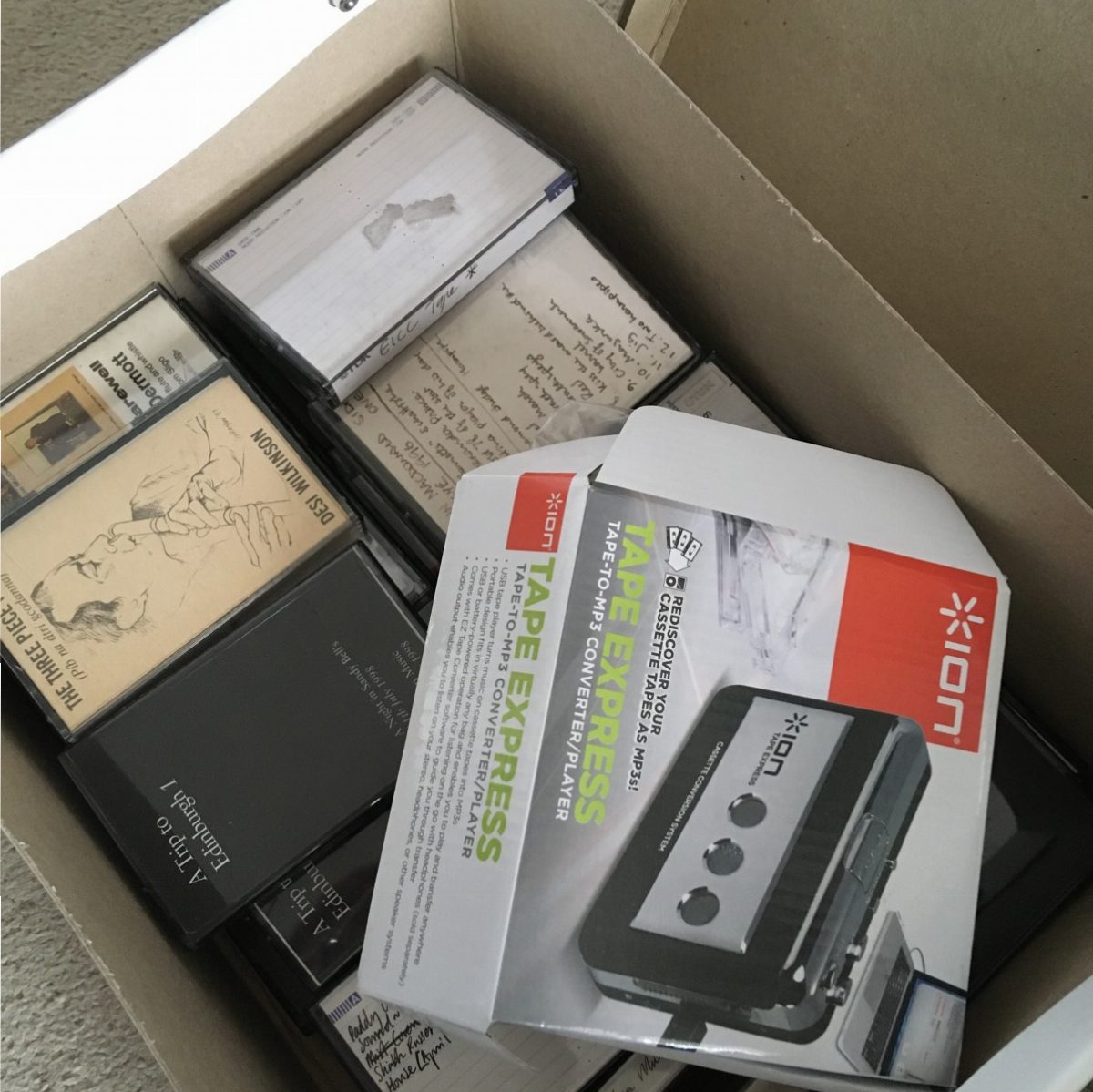
Another thing I am trying to do is to digitise some of my cassette archive. It is taking a while to get off the ground, but the numbers of forgotten gems, private recordings, cassette-only releases, copies passed on by others is a great incentive. It will take a good while once it gets going, but I feel it will be worth it.

Similarly for boxes of misfiled sheet music. Some people are able to file things very neatly and are much more organised than myself in a way that I can only admire. If I can’t be quite like that, I can at least sift through those duplicates, manuscripts and print-outs a bit more. It might make locating some of the tunes to learn a little easier.

A couple of final points. Many independent artists release recordings on Bandcamp.  They recently had a Friday whereby they waived their fees to artists on all purchases. There will be other ones coming up too. Spotify etc. are great for convenience, but give the artists next to nothing per play. If there is someone you really like, consider buying something from them to keep them going.

Look out for livestreams of concerts by musicians on YouTube and Facebook, maybe other platforms too. As gigging, teaching and collaboration is much harder at the moment, this is one way of getting to see them and putting something in the tips jar. Wintertrad in Edinburgh is one example and can be found on Facebook, with online gigs and workshops. There are many others, from sessions in Berwick, Boston and Belfast, to Fèis Rois virtual workshops available online until 15 May.

Stay safe and enjoy your music however you can.

April update: a celebration of community

With events cancelled and many of us in lockdown, a look ahead to what this means for FluteFling.

The Magic Flute! FluteFling Edinburgh Weekend 2019 (c) Gordon Turnbull

It’s a sunny Wednesday in Edinburgh, the windows are open and birds are busy outside. Spring is upon us and all would seem well if it wasn’t for the fact that we are in the middle of a pandemic and most people are in some form of lockdown or restricted movement. It is an uncertain and worrying time for everyone, with various concerns for health, loved ones, neighbours and colleagues, physical and mental well-being, work and finances.

It has been heartening to witness many examples of people supporting each other in the community, both locally and across the world. And there has also been much celebrating and sharing of music and song to help unite people and raise spirits in these strange and difficult times.

Traditional music connects people, places and histories and celebrates what is common to us all and the festival season would be fast approaching, when musicians, dancers and lovers of music reunite, share tunes, stories and good times together.

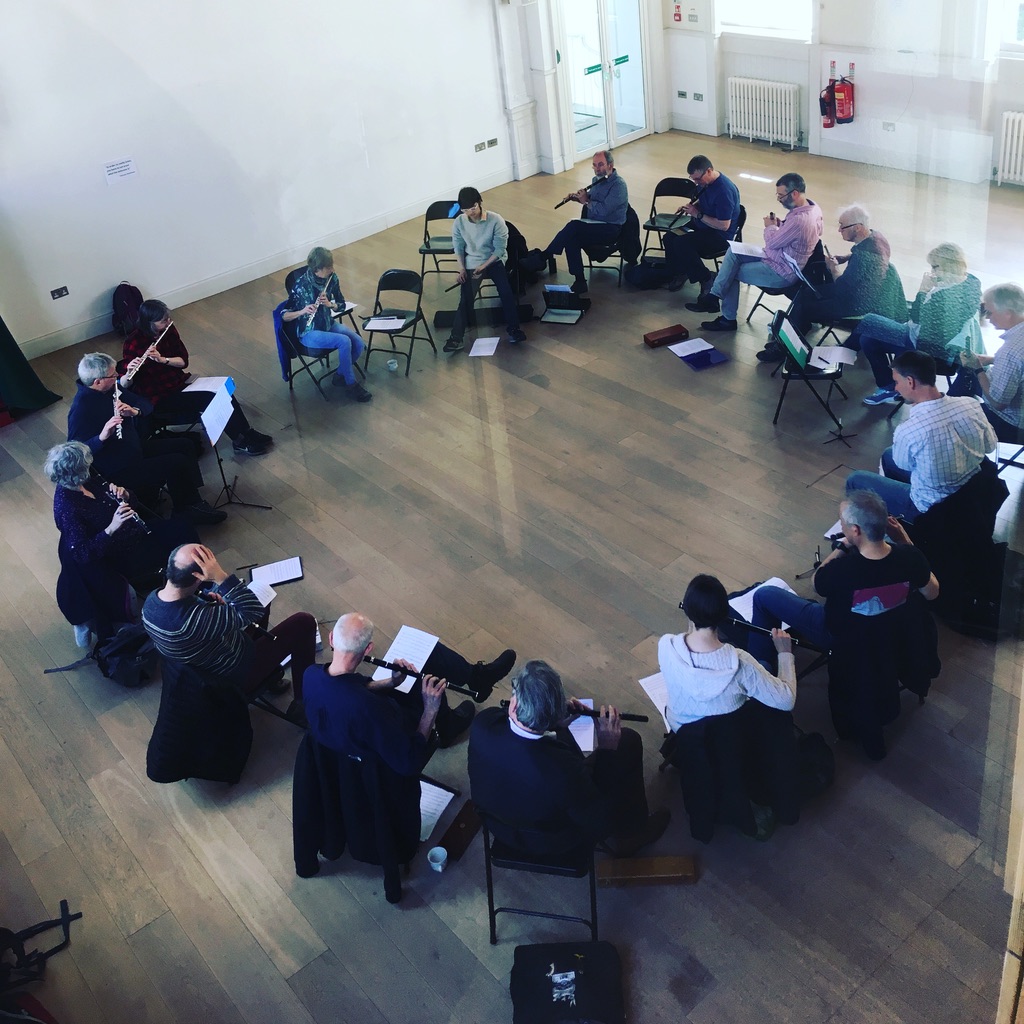
Traditional flute workshop with Sharon Creasey at FluteFling Edinburgh Weekend 2018 (c) Gordon Turnbull

We would have seen some of that last weekend too, with what was promising to be an amazing FluteFling Edinburgh Weekend, our seventh no less. In previous years, people have travelled far for the events in Edinburgh and Aberdeen to meet, play and learn more about traditional flute playing in Scotland and to be part of a revival. As an organiser and sometimes tutor, it is both humbling and inspiring to be part of this and to witness it take on a life of its own, fuelled by the energy, enthusiasm and support of the community that has grown up around FluteFling.

It is a particularly difficult time for those freelance musicians and performers who rely on performances and audiences for an income. Please do what you can to support them — if you buy their music, follow them on social media, share their work or reach out to them, it all helps. And look out for performances from home via various streaming apps. Facebook seems to be popular for this, but there will be other outlets too, such as Youtube.

For some of us in lockdown and not key workers on the front line, events force us to slow down, restrict our movements and reflect. For me, this slower pace and gifted time has allowed me to get the flute out more, to begin thinking about ideas for future FluteFling activities, to begin tweaking and tidying up the website. The various people who are involved in running FluteFling events will also be exploring ideas together.

On a personal note, I have found it difficult in recent months, maybe years if truth be told, to focus on some parts of my own music-making. It is true I am sure for many of us with busy lives and commitments and so maybe this is an opportunity for us all to reconnect with our own music, be in less of a hurry to learn that tune for this session, to maybe explore existing repertoire. Time to to reexamine tone and tuning, revisit ornaments and articulation, to slow down and rediscover the joys and consider what our music means to us.

I have begun to take inspiration from something Paul McGrattan shared at Cruinniú na bhFliúit -The Flute Meeting in Ballyvourney a couple of years ago. Alongside many other ideas, he suggested recording yourself once a week to monitor progress and focus your practice. So my underused YouTube channel is now going to have a new tune or set of tunes posted every Friday during the lockdown period.

To begin with at least, this will focus on tunes that I have taught or might otherwise already be found in the Resources section or on my Soundcloud account, where they are slowed down for playing. I expect other tunes, recalled, revived, relearned or newly discovered for me, will also feature on that YouTube channel.

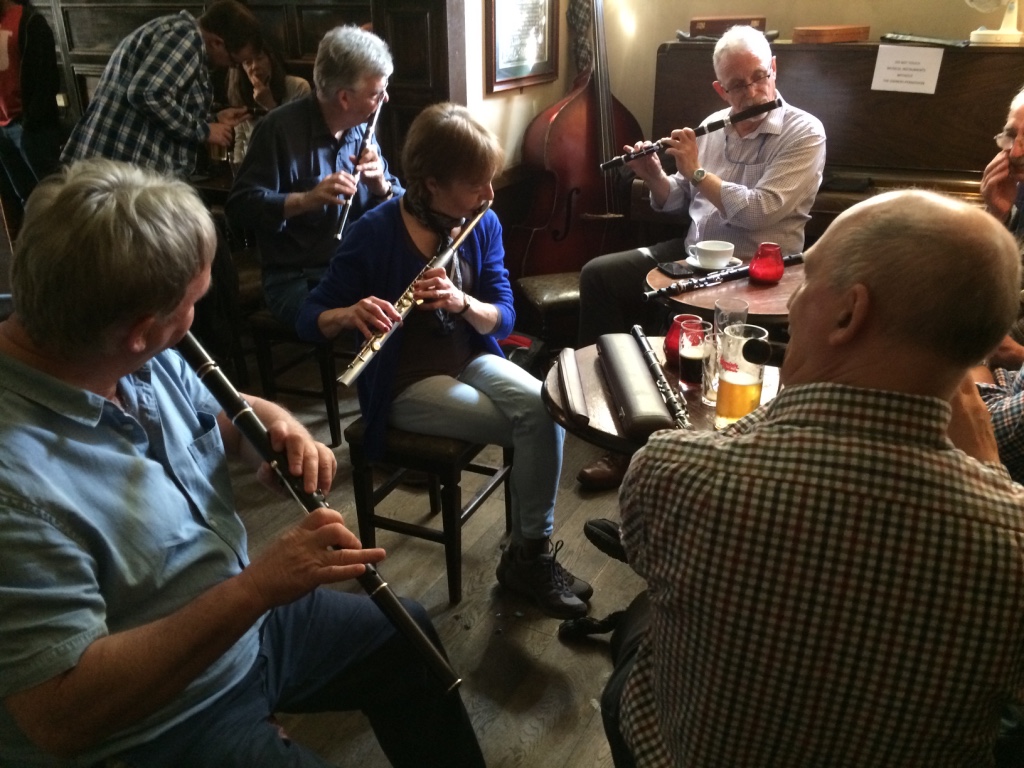
A flute session in Sandy Bell's Bar, Edinburgh (c) Gordon Turnbull

A flute session in Sandy Bell’s Bar, Edinburgh (c) Gordon Turnbull

There will be some other posts on this website, certainly more regularly than in recent months. But in the meantime, thank you everyone, for being involved, for playing and sharing your music and for being part of the traditional flute and whistle community in Scotland.

Stay safe and stay well and we will see each other on the other side when this is all over. The next FluteFling Weekend, whenever that may happen, will be quite some celebration, for sure.

Fermanagh Reels and pulse: November workshop

November’s workshop in The Wash House in Portobello, Edinburgh saw us look at a couple of reels from County Fermanagh that are popular in the north of Ireland. The Three Scones of Boxtie (also spelled Boxty) and Jig Away the Donkey (one of two tunes with that name) come from Hidden Fermanagh, a book of interviews and accounts exploring the lesser-known music and song from County Fermanagh, with accompanying CDs. The music was transcribed by fellow FluteFling tutor Sharon Creasey from original recordings.

Eddie Duffy (flute) and Mick Hoy (fiddle)

Eddie Duffy (flute) and Mick Hoy (fiddle)

It will come as no surprise to many that Cathal McConnell was very central to the project and helped introduce the music and musicians to a wider audience, Eddie Duffy (flute) and Mick Hoy (fiddle) in particular. They hailed from Derrygonnelly, which now hosts an annual  festival. Altan recorded The Three Scones, but these unusual tunes were recorded together by Desi Wilkinson on his Shady Woods album and are often played by Rebecca Knorr in Edinburgh sessions. Rebecca is no stranger to Northern Irish sessions herself and taught at FluteFling’s Edinburgh Weekend earlier this year.

We focused on The Three Scones, which we learned by first singing them to Desi Wilkinson’s recording, which is in a different key to the manuscript version. This can often happen in traditional music and having an existing internal sense of a tune can help to create a shortcut when then referring to the manuscript. By retaining a strong sense of the reference performance, we can fast-track the melody, breathing and phrasing of the tune and get it “under the fingers”.

We then looked at creating rhythm and swing through breath, emphasising Beats 1 (more) and 3 (less) and also how this happens against a backdrop of the flow and phrasing of the tune. Different styles do this differently, but in Ireland it is better established on the flute than in Scotland. It so happened that the class was all flute players, so we listened to and compared Matt Molloy (Ireland) and Calum Stewart (Scotland), who have very different approaches to very different repertoires, both with inspiring results.

The resources for the workshop can be found on the Resources page.

The next workshop will take place on Saturday December 14th and will continue the themes. The workshop is filling up but there are still some places available.

September polkas, singing, breath

Anascaul Lake - geograph.org.uk - 919995

Photo of Anascaul Lake, County Kerry by Peter Church

The Autumn workshops got off to a fine start with a look at a pair of Irish polkas that I have been teaching for many years that make a great way to warm up.

Tune background

I learned Patrick O’Connor’s Polkas from a cassette recording of a County Cork band called The Monks of the Screw, who took their name from a drinking club (the screw in their name is a corkscrew). There’s an old web page on them here and you can hear snippets of the recording at Irishtune.info.

I have also recorded the version I wrote and will add sheet music to the Repertoire page. Polkas have an interesting history as a dance form and can found around the world. In Ireland, a distinction can be drawn between the polkas of the south west, in particular Cork and Kerry and the area around Sliabh Luachra, and those of the Connaught area (Mayo, Galway, Sligo, Leitrim, Roscommon) further north.

The Cork and Kerry polkas are played very briskly and often have an off-beat emphasis, while those of the Connaught area are more like marches in many ways. Indeed, some of the Irish polkas can be traced to Scottish 2/4 marches. Farewell to Whiskey and The Barren Rocks of Aden are two obvious examples. For this latter reason, I find the way of playing Irish polkas on the flute and whistle a useful in road to playing Scottish marches on those instruments.

Patrick O’Connor’s Polkas were originally collected in Ceol Rince na hÉireann vol 2 as untitled tunes and I reversed the order that they appeared there and in the recording as I preferred the contrast between the runs of the first and the more punchy jumps in the second. It turns out that the one we learned first is better known as the Anascaul Polka (notation and discussion on The Session), named after a village on the Dingle peninsular, whereas the other one has no other name of its own (notation and discussion on The Session).

Caution: The Session is a very useful website that I often refer to, but the notation and information can sometimes contain errors, so please refer to it with a pinch of salt

To my knowledge the tunes are not as widely known as they maybe should be. Perhaps their relative simplicity puts people off, but this also creates an opportunity to concentrate on playing techniques.

Techniques

We began by listening to the Annascaul Polka, which is constructed on simple runs up and down. In A Dorian (see here for some ready modes information) with A as the top note and G at the bottom, it sits within the bagpipe scale, hinting that it may even have been a bagpipe tune at one point. There is a C natural as it ascends, but this and the F# are missed on the descent, making it a little ambiguous. Patrick O’Connor’s No. 1 is more punchy within the same scale.

We then alternately sang and played that part of the tune to help root it and connect it to our breathing more directly. Singing the tune, no matter how quietly, helps to develop the ear and to find places to breathe. We also naturally articulate parts of the melody in diddling that can be referenced when playing our instruments, particularly the whistle or low whistle.

It is arguably present in Gaelic puirt à beul, here’s a direct Irish example:

On the flute, glottal stops are more common in Ireland for rhythm and articulation, but tonguing is sometimes subtly used and is generally associated with whistle playing.

We looked at generating pulse with breath and on the low whistle this proved to be subtle but effective.

We discussed cuts, strikes, rolls and crans and also what I call The Sylvain Barou Method for learning and developing them, which is described in this post from 2017.

Finally, we looked at some books to support our learning. Some of the stand-out ones are discussed in this post, to which I would add Steph Geremia’s Up She Flew, a CD with her accompanying book of transcriptions and notes. To date, the only book on the low whistle I am aware of is The Low Whistle Book by Steáfán Hannigan and David Ledsam.

Upcoming events

The next Edinburgh workshop will be 23 November, while the Aberdeen Weekend takes place 1-3 November.