
 This is a four part strathspey that sounds very much like a pipe tune but the fourth part drops below the piping range, suggesting that this may be a fiddle setting.
The Fiddler’s Companion confirms that the itself tune is old, having first appeared in the Drummond Castle Manuscript of 1734 as Sir Alexander McDonald’s Reel and later printed in Bremner’s Collection of 1757 as Sir Alexander McDonald. It has traveled to Canada and Ireland and exists in many forms under different names, including as as fling and as a jig. Some say the Devil’s Dead is a well-known song in Ireland that is set to this tune.
I first learned this as an Irish two-part reel that I later realised was a fling. I then found it was a strathspey and discovered from Edinburgh fiddler Doug Patience (now in Meenross, County Clare) that it had a third part. And finally, years later I learned it had a fourth part. It seems that 2, 3 and 4-part versions are common.
The most frequent decoration here is cuts and casadhs (a late double grace note), but there is an opportunity to roll in the third part on the high E in the opening phrase and later in the 4th part on a low E phrase near the end. Keep a regular pulse throughout with the breath and it’s OK to tongue the shorter parts of the scotch snaps to give them more punch. Look out too for opportunities to put in a brief pause on the longer parts of the snaps.
The resources for the tune can be found on the Resources page for this year’s classes.
Photo: Native pine at Glen Derry, Mar Lodge Estate. Copyright C Mills 2013. Used with kind permisssion.
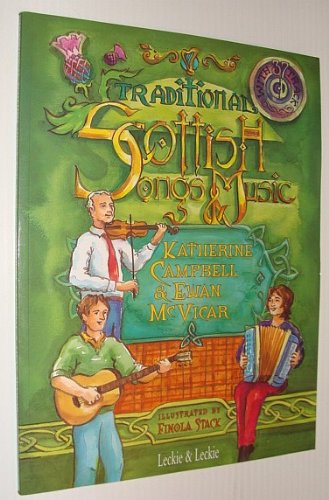 However, there is evidence that the melody goes back further than that. Katherine Campbell and Ewan McVicar include it in their schools’ anthology, Scottish Traditional Songs and Music. There is it called Sherramuir March or The Stewart’s March. It was originally a pipe tune with 9 parts entitled Gabhaidh Sin An Rathad Mór (We Will Take the High Road), and associated with the MacIntyres of Cruachan, Argyll. The Stewarts of Appin then claimed it and played it when returning from the Battle of Pinkie in 1547. The Gaelic title refers to the Battle of Inverlochy of 1644.
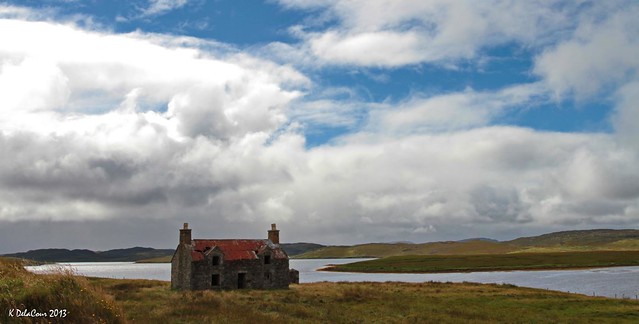
 The Improvers class resumed this week with a lively piece of music from the Western Isles via Northern Ireland.