Music from the Western Isles and beyond

At last week’s class we discussed some aspects of Gaelic Mouth Music, psalm singing and Cape Breton fiddling in relation to some of the tunes we have been learning. This quick follow-up post is to share some related links.

Gaelic psalm singing

  • For some background on this unique singing style, there is an introduction at the Education Scotland website:

    Each line of the psalm is ‘put out’ by the precentor or leader. The congregation then joins in gradually and slowly sings those words, but with varying degrees of ornamentation and at varying speeds. Although each singer is singing the same tune, the effect is of a continuous sound with different chordal effects being created. This is known as heterophony.

    Although the music sounds very complicated, the roots of the melodies being sung lie in straightforward Scottish metrical psalm tunes.

  • Gaelic psalms at Back Free Church, Isle Of Lewis- 20/21/oct/2003:
  • The clip is from the church in this recording, Salm vol 2 which the text in the link describes as:

    the congregation singing unrehearsed, unaccompanied Psalms with various precentors.

    This is traditional Gaelic psalm singing in the style of free heterophony – precentor-led singing with the congregation following through. Various precentors lead a large congregation in the most popular psalms.

  • The many field recordings at Tobar an Dualchais/ Kist o Riches website includes this anonymous recording of Salm 133.

Mouth Music

  • We have looked at music associated with Mouth Music a little before. Here’s an example in strathspey time, similar to the Bidh Eoin and the Donegal Highlands we are looking at. Air Do Shlàinte Mhàiri an Dotair is sung by Annie Arnott and was recorded by the great archivist Hamish Henderson.

Cape Breton fiddle

    • We talked about the relationship between the fiddle styles of Cape Breton, the west of Scotland and the type of swing we are trying to put into our playing as flute players. I mentioned Winston “Scotty” Fitzgerald as someone to look out for and there are some related clips on Youtube, but it can also be seen in the opening strathspey by left-handed fiddler  Kimberly Fraser  in this set, accompanied by Mark Simos on guitar.

Highlands

  • Here’s a clip of Duncan Chisolm to compare, playing a strathspey followed by Scottish and Irish reels:

Donegal

  • And here are some links to Donegal. First some fine fiddling from Glencolmcille. The tunes are Casey’s Pig (The Duke of Gordon’s Birthday) and Miss McLeod of Raasay:
  • Here’s a Highland being danced:

Finally

  • Here’s a clip of flute player Calum Stewart astonishing performance of James Scott Skinner’s astonishing variations on Tullochgorum.

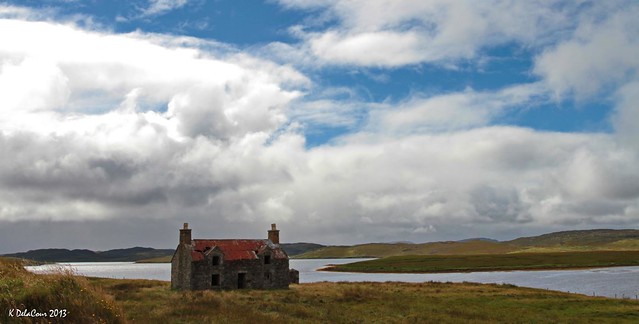
Photo from the Western Isles (CC) Kristian Dela Cour.

Bidh Eoin: mouth music on flute and whistle

Boat in Fisherrow HarbourThe Improvers class resumed this week with a lively piece of music from the Western Isles via Northern Ireland.

Bidh Eoin (Eoin’s Boat) is a piece of port a beul (mouth music) that I first came across on one of a series of landmark recordings of Scottish Music that were produced by The School of Scottish Studies, originally on vinyl. Consisting of field recordings, they showcase a variety of different types of traditional music to be found in Scotland. Volume 2 is Music from the Western Isles and features waukling songs, psalms and mouth music. Bidh Eoin appears there as Seallaibh Curaigh Eoghainn (Look at Ewen’s Coracle) as sung by Mrs Annie Arnott. Puirt à beul (plural) are songs for dancing to, often when no instruments are available. The emphasis is more on the rhythm and less on the meaning of the words. There are some recordings of people singing Bidh Eoin on YouTube.

This was recorded by Belfast flute player Desi Wilkinson on The Three Piece Flute and is part of a set that includes a Highland — a type of tune found in the north of Ireland that is directly related to the Scottish strathspey — which we will look at next time. Desi Wilkinson was the first person I heard play Scottish tunes on the flute and his work with the band Cran also explores the two traditions.

Update: Here’s a video of Desi Wilkinson with fiddler Gerry O’Connor and Brendan Hearty on guitar playing Bidh Eoin as part of the Steeple Sessions concerts. The following tune is Casey’s Pig, a version of The Duke of Gordon’s Birthday, written by William Marshall. Thanks to Stirling-based flute player Ian Stevens for the link.

The written and recorded resources for this tune can be found on the Resources page for the class

Photo of a boat in Fisherrow harbour, East Lothian (c) Gordon Turnbull.

New tunes for Autumn: Johnny Faa and The Little Heathery Hill

FluteFling classes resumed this week with the Slow and Steady group. We had a gentle return with the air of a Scottish song, Johnny Faa and a look ahead to the tune that I hope will go well with it, an Irish set dance called An Cnoicín Fraoich which translates as The Little Heathery Hill or The Little Heathy Hill

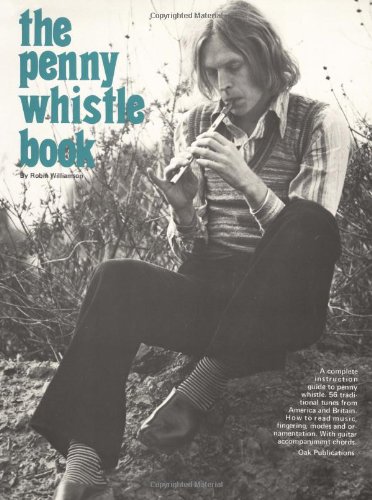
Johnny Faa was first published in 1720 and features in Robin Williamson’s Penny Whistle Book, which is where I first came across it. The book is not only clear with good advice but I like the way the author, a professional storyteller and founder of The Incredible String Band, provides background stories for many of the tunes. Somehow it gives the music further depth and respect, which is helpful when first encountering playing traditional music.

Johnny Faa was an historical character, the King of the Gypsies in Scotland during the reign of James IV (1473-1513) or James V (1512 –1542) of Scotland, depending in which source you reference. The tune is the melody for a song that is related to The Raggle Taggle Gypsies and other ballads and is set in Ayrshire. For the academically-minded, I found this fascinating-looking paper (free to register to view online) on the cultural background to Johnny Faa and Black Jack Davy. I hope to get the chance to read it properly.

The only time I have heard the tune played was in a pub during a gathering of traditional flute players in Aberdeen in 2001 by either Eddie McGuire or Chris Norman, who were exchanging tunes on a piccolo. They are both excellent exponents of the Scottish flute, so needless to say they brought the place to a standstill.

Music and a recording for this tune can be found on the new Resources 2013-14 page.

The Little Heathery Hill is an Irish set dance or long dance from Munster in the SW of Ireland, a tune that has particular steps for a solo dancer associated with it. Not to be confused with set dancing, which is a social type of dance.

There aren’t many recordings of this tune, although YouTube has a few, including this nice version played on 5 string banjo. Furthermore I have never heard it played by anyone else, despite coming across it initially in Bulmer and Sharpley’s collection in the 1980s. It needs to be heard more I believe. A little background to the tune, first published in the 1860s, can be found on the TuneArchive web site.

The tune features F natural, which can be a challenge on a keyless flute or whistle. However, it occurs with an E before and after the note, it becomes possible to slide the E finger to bend the note up and then back down, which fits well with the overall feel of the tune and its shifting modes.

Set dances have a kind of hornpipe feel, but this tune can also be played in a more stately way too, leading out from Johnny Faa. I play it both ways in my recording, which can be found on the resources page for the term.

Photo of North Hill of the Eildon Hills by Bex Ross, published under a Creative Commons licence.

Individual tuition available this Autumn

flutefling_flutes_sm_01For a short period this Autumn I will be offering a very small number of lessons for individuals again depending on availability. For the past few years this hasn’t been possible due to my schedule, but I now have some time freed up on Mondays, Tuesdays and some Fridays.

This is a great opportunity to have tailor-made sessions focusing on your specific interests. Further details on the dedicated page. If you’re interested, please get in touch to discuss mutually convenient times.

gordon [at] flutefling [dot] co [dot] uk

Update: 11 October

Due to demand, the window for this is now closed. I will be in touch with everyone who has contacted me to discuss arrangements.

FluteFling Autumn term 2013

Flutes and whistles: Bhreatnach, David Begg, Emily Donohoe and Bruce Curtis in Sandy Bell's, Edinburgh

Flutes and whistles: L-R: Saidhbhin Bhreatnach, David Begg, Emily Donohoe and Bruce Curtis in Sandy Bell’s, Edinburgh

The Summer term has only just finished but already I am looking ahead to the Autumn term. One of my many jobs this summer is making things easier for everyone to find so this site will become a one-stop shop for my flute and whistle teaching*.

So the first thing I have done is organise the dates for the Autumn term, which begins on Thursday 12th September with the Slow and Steady class. The Improvers class begins the following week on Thursday 19th September. The term will be 6 classes long, with the classes alternating and there once again being a break in mid October. Full details on the About page and other dates into Summer 2014 can be found on the Diary page.

Slow and Steady? What’s happened to the Beginners class? Don’t worry, this is essentially the same class, beginners are still welcome, but we always take things steadily in this class, which some people find useful.

The Improvers class continues to cover a range of abilities, experiences and backgrounds.

*The Flow will still contain useful information relating to traditional flute playing and The Flow Music Workshops will still carry information related to my other music teaching activities.

 Photo: Flutes and whistles: L-R: Saidhbhin Bhreatnach, David Begg, Emily Donohoe and Bruce Curtis in Sandy Bell’s, Edinburgh by Gordon Turnbull